![High-quality HDPE, PPR, PE, and PVC pipes supplied to projects worldwide – [Ten Dharma Realms Pipeline Company] | Exported to Europe, America, the Middle East, Southeast Asia, and Central Asia,Factory direct wholesale](https://sfjindustry.com/wp-content/uploads/2026/03/cropped-更换logo背景为透明-1.png)
1. Introduction
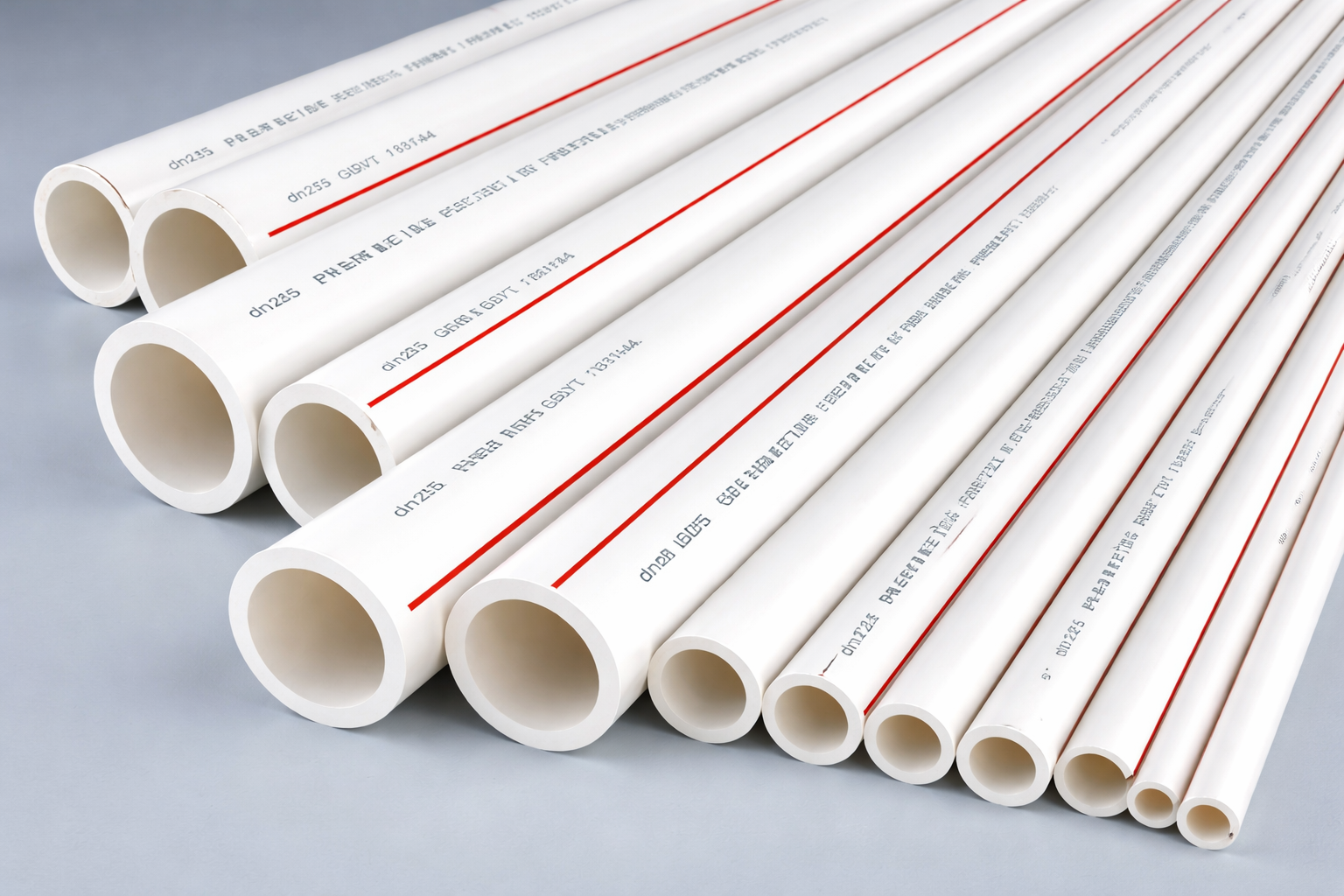
Polypropylene Random Copolymer (PPR or PP-R) pipes are widely used thermoplastic piping systems designed for hot and cold water distribution, heating networks, and industrial fluid transport. Their adoption has increased due to a balance of thermal stability, corrosion resistance, and lifecycle cost efficiency.
Internationally, PPR systems are primarily governed by ISO 15874, which defines material requirements, pressure-temperature classifications, and long-term performance criteria for building water systems.
From a lifecycle engineering perspective, PPR pipes are typically designed for up to 50 years of service life under defined temperature and pressure classes, subject to correct installation and operating conditions.
2. Manufacturing Process
2.1 Raw Material Composition
PPR pipes are produced from random copolymer polypropylene (PP-R), formed by polymerizing propylene with a small amount of ethylene to improve flexibility and impact resistance.
2.2 Production Steps
| Step | Process Description | Engineering Significance |
| Raw Material Preparation | PP-R granules with stabilizers and pigments | Ensures thermal and UV stability |
| Extrusion | Continuous melt extrusion through die | Defines pipe diameter and wall thickness |
| Calibration & Cooling | Vacuum sizing and water cooling | Controls dimensional tolerance |
| Cutting | Standard lengths (e.g., 4 m, 5.8 m) | Logistics and installation efficiency |
| Inspection | Hydrostatic, dimensional, visual tests | Compliance with ISO 15874 |
Key Note: Manufacturing must comply with ISO 15874 test protocols, including long-term hydrostatic strength testing (ISO 9080 / ISO 1167) .
3. Performance Characteristics
3.1 Mechanical and Thermal Properties
| Property | Typical Value Range | Reference |
| Density | ~0.90 g/cm³ | |
| Tensile Strength | ~25–30 MPa | |
| Max Operating Temperature | Up to 95°C | |
| Thermal Conductivity | Low | Industry standard |
| Impact Resistance | Good (reduced at low temperature) | Industry data |
3.2 Key Advantages (Engineering Perspective)
- Corrosion resistance: No electrochemical degradation (unlike steel)
- Homogeneous joints: Socket fusion creates leak-free connections
- Low thermal conductivity: Reduces heat loss in hot water systems
- Chemical resistance: Suitable for many industrial fluids
3.3 Limitations
- Low-temperature brittleness (below ~0°C in some cases)
- Higher thermal expansion vs. metal pipes
- Requires proper support spacing and expansion compensation
4. Dimensions & Technical Specifications
4.1 Standard Systems
| Standard | Scope |
| ISO 15874 | Global standard for PP piping systems |
| DIN 8077 / 8078 | Dimensions and tolerances |
| GB/T 18742 | Chinese national standard |
4.2 Typical Size & Pressure Range
| Parameter | Range |
| Outer Diameter (OD) | 20 mm – 160 mm |
| Pressure Classes | PN10, PN16, PN20 |
| Pipe Series (S) | S5, S4, S3.2, S2.5 |
| SDR Range | SDR11 – SDR6 |
Example:
- S5 (PN10) → cold water systems
- S2.5 (PN25) → high-pressure hot water systems
These classifications are defined based on wall thickness vs. diameter (SDR relationship).
5. Applications
5.1 Building Services
- Domestic hot and cold water supply
- Radiant floor heating systems
- HVAC piping networks
5.2 Industrial Applications
- Chemical fluid transport (non-aggressive media)
- Compressed air (with limitations)
- Food-grade water systems
5.3 Infrastructure
- Hospitals and clean water systems
- Hotels and commercial buildings
Case Insight:
PPR is frequently specified in modern building plumbing systems due to its compliance with potable water safety and thermal endurance requirements under ISO 15874.
6. Selection Guide (Engineering & Procurement Focus)
6.1 Key Selection Parameters
| Factor | Recommendation |
| Temperature | Verify application class (ISO 15874) |
| Pressure | Match PN rating with system design |
| Pipe Series (S) | Lower S = thicker wall = higher pressure resistance |
| Certification | Require ISO 15874 / DIN compliance |
| Jointing Method | Prefer socket fusion for integrity |
6.2 Material Grade Considerations
- PP-R (standard) → general plumbing
- PP-RCT (modified) → improved high-temperature strength
- Multilayer (with aluminum) → reduced thermal expansion
6.3 Supplier Evaluation Checklist
- Compliance with ISO 15874 testing
- Traceability of raw materials
- Hydrostatic test certification
- Proven project references
7. Comparative Overview (PPR vs Alternatives)
| Property | PPR | HDPE | PVC-U | Steel |
| Corrosion Resistance | Excellent | Excellent | Good | Poor |
| Temperature Resistance | High (≤95°C) | Moderate | Low | High |
| Joint Method | Fusion | Fusion | Solvent | Welding |
| Thermal Expansion | High | High | Medium | Low |
| Lifecycle Cost | Moderate | Low | Low | High |
8. Conclusion
PPR piping systems represent a technically mature and globally standardized solution for building water distribution and heating applications. Under ISO 15874 design frameworks, they provide a reliable balance of:
- Thermal performance
- Long-term pressure resistance
- Installation efficiency
However, optimal performance depends on correct system design, material selection, and adherence to standards. For engineering and procurement professionals, evaluating application class, pressure rating, and supplier compliance is essential to ensure lifecycle reliability.
Final Insight
Rather than being a universal replacement for all piping materials, PPR is best positioned as a high-performance solution for controlled environments (buildings and industrial systems) where corrosion resistance, hygiene, and thermal efficiency are critical.