![High-quality HDPE, PPR, PE, and PVC pipes supplied to projects worldwide – [Ten Dharma Realms Pipeline Company] | Exported to Europe, America, the Middle East, Southeast Asia, and Central Asia,Factory direct wholesale](https://sfjindustry.com/wp-content/uploads/2026/03/cropped-更换logo背景为透明-1.png)
1. Overview of Two Main Municipal Drainage Pipeline Materials
1.1 Basic Definition of HDPE Pipe
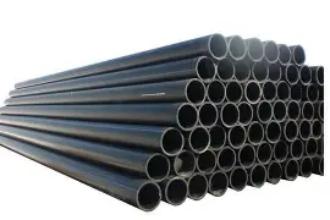
HDPE pipe is a high-density polyethylene plastic pipeline. It belongs to the family of thermoplastic resin pipeline products. The raw material is high-density polyethylene particle, and it is molded by one-time extrusion processing. The material has a stable molecular structure and has gained wide recognition in modern municipal construction. As a new type of flexible pipeline, HDPE pipe differs greatly from traditional rigid pipelines in material properties and installation methods.10
1.2 Basic Definition of Cement Pipe
Cement pipe is also called concrete drainage pipe. Its main raw materials are cement, sand and stone aggregate, formed by pouring and vibration compaction. It is a typical rigid pipeline for drainage with a long application history. As a classic traditional municipal pipeline material, it relies on a solid concrete structure to bear loads and still occupies a stable market share in infrastructure projects, especially in areas with stable geology and low budget.
1.3 Core Service Scope of Municipal Engineering Pipeline
Municipal pipelines bear the work of urban water circulation and environmental protection. They cover rainwater collection and discharge, domestic sewage transportation, road buried drainage, sewage diversion, municipal water supply auxiliary piping, and urban community and road reconstruction projects. Pipeline performance directly affects urban operation safety and environmental quality, while material selection decides project quality, construction efficiency and long-term service life. Therefore, comparing the performance and application scenarios of different pipes is essential for scientific decision-making in municipal engineering.
2. Physical Performance Contrast Between HDPE Pipe and Cement Pipe
2.1 Structural Strength and Bearing Capacity
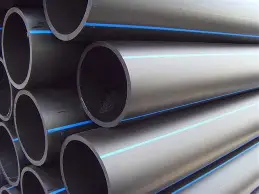
Cement pipe has high compressive strength and can resist vertical ground pressure well. It bears heavy vehicle rolling on the road surface, and its rigid structure keeps stable under static load. However, its strength is only effective under uniform and stable stress. HDPE pipe has lower hard compressive strength, but it owns excellent flexible compression resistance. It can deform moderately under pressure and recover its original shape after stress reduction. Thus, it avoids crack damage under uneven ground settlement or external impact. In short, rigid bearing of cement pipe suits fixed, stable foundations, while flexible bearing of HDPE pipe adapts to complex geological terrain and dynamic load conditions.
2.2 Anti-Corrosion and Anti-Aging Performance
Cement pipe is easily eroded by sewage acid and alkali substances. Long-term sewage immersion causes concrete peeling and internal corrosion, which reduces pipeline inner diameter gradually. External soil corrosion also weakens the pipe wall structure, leading to thinning and cracking over time. In contrast, HDPE pipe has stable chemical inertness. It resists acid, alkali and salt corrosion effectively, and neither sewage nor soil can erode the pipe body. With anti-aging additives added during production, it prolongs outdoor service time significantly. There is no rust, no decay, and no material deterioration, making corrosion resistance a core advantage of HDPE pipe in harsh environments.
2.3 Seismic Resistance and Adaptability to Foundation Settlement
Cement pipe is hard and brittle by nature. Slight foundation settlement or seismic vibration leads to pipe fracture easily. Pipeline joint dislocation often causes leakage risk, which is difficult to repair in time. For this reason, it is not suitable for soft soil areas, subsidence areas or high seismic risk zones. HDPE pipe has good toughness and flexibility. The whole pipe can follow soil layer displacement without breaking, and joint sealing will not fail under small settlement. It adapts well to seismic zones and soft stratum construction, which in turn reduces the hidden danger of pipeline breakage and leakage effectively.
2.4 Wear Resistance and Internal Smoothness
Cement pipe inner walls become rough after long-term use due to corrosion and sediment deposition. Sediment and debris adhere easily to the inner wall, and pipeline blockage occurs frequently in later periods. Manual dredging cost increases year by year, and repeated dredging may damage the pipe wall further. HDPE pipe inner walls are smooth and uniform with low surface friction coefficient. Fluid flowing resistance stays at a low level, so sewage and sediment pass through smoothly. Less dirt adheres to the pipe’s inner surface, and as a result, dredging frequency drops greatly in daily use, saving a lot of maintenance cost and time.
3. Construction and Installation Contrast of Two Pipes
3.1 Self-Weight and Transportation Convenience
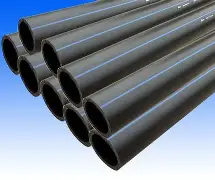
Cement pipe has a large unit weight, and single pipe pieces are heavy and hard to carry manually. Large mechanical equipment like cranes and trucks is needed for moving and loading, which increases transportation cost and handling risk. Long-distance transportation is especially uneconomical due to high weight and low loading efficiency. HDPE pipe is light in overall weight, only about 1/10 of cement pipe with the same caliber. Manual and small machinery can complete carrying work easily. Loading and unloading processes save time and labor, and long-distance transportation cost is well controlled with higher loading efficiency and lower damage rate.
3.2 On-Site Installation Process and Cycle
Cement pipe installation needs strict foundation leveling first. Sand bedding and concrete fixing are required to ensure stability, and joint grouting and sealing take many working steps. The whole construction cycle is relatively long, and it is easily affected by weather conditions like rain, which delays the project further. HDPE pipe adopts a socket connection mode with standardized installation steps. No complex foundation pouring work is needed; only simple leveling is required. Pipe laying speed is obviously faster, and this shortens the overall project construction period greatly, especially suitable for large-scale and time-sensitive projects.
3.3 Joint Sealing Effect and Leakage Probability
Cement pipe joints rely on cement mortar sealing, which is rigid and inflexible. The sealing layer cracks easily under ground displacement or temperature change, leading to sewage leakage and soil backflow. Later leakage maintenance work is frequent and costly, and repeated repairs may damage the surrounding soil structure. HDPE pipe adopts elastic rubber ring sealing at joints. The joint fits tightly without gaps, and the rubber ring can adapt to slight displacement and deformation. Good waterproof and anti-seepage effect lasts long, and leakage rate is far lower than that of cement pipelines. Stable sealing reduces later maintenance work and environmental pollution risk effectively.
3.4 Construction Adaptability to Terrain
Cement pipe needs a straight and flat laying route with strict gradient requirements. It cannot bend to adapt to terrain changes, and turning construction needs special pipe fittings like elbows, which increases cost and complexity. Site construction flexibility is insufficient, especially in areas with complex terrain like hills and curves. HDPE pipe has certain bending performance and can adapt to slight terrain curve laying without many special fittings. Fewer auxiliary fittings are used in construction, and it suits complex road and terrain laying scenes, improving construction efficiency and reducing project cost.
4. Service Life and Later Maintenance Cost Comparison
4.1 Theoretical and Actual Service Life
Qualified cement pipe has a theoretical service life of 20 to 30 years under ideal conditions. However, corrosion, sediment deposition and foundation settlement shorten actual use time significantly. Partial damage often needs local pipe replacement within 10-15 years, which increases overall project cost. HDPE pipe standard service life reaches 50 years, and material performance keeps stable for a long time. There is less aging and damage in the whole life cycle, and long service life matches municipal long-term planning, reducing the frequency of large-scale renovation.
4.2 Daily Maintenance and Dredging Cost
Cement pipe is easy to block and corrode, so regular inspection and dredging are necessary every year. Repair and replacement costs accumulate continuously, and later operation investment stays at a high level. In some cases, the maintenance cost within 20 years may exceed the initial project cost. HDPE pipe is not easy to block or damage, so daily maintenance workload is small. Dredging and repair frequency reduces obviously, and long-term comprehensive use cost is lower. It saves a lot of manpower and material resources for municipal management departments.
4.3 Pipeline Renewal and Renovation Difficulty
Damaged cement pipe is hard to repair partially. Large area excavation is needed for replacement, which affects road traffic and urban normal order seriously. The construction period is long, and the impact on residents’ life is great. HDPE pipe can adopt trenchless repair technology like lining and bursting. Partial replacement and internal renovation are simple, and less ground excavation reduces urban influence. Renovation work is efficient and low-impact, which is especially suitable for urban core areas with dense population and heavy traffic.
5. Application Scenarios of HDPE Pipe in Municipal Engineering
5.1 Urban Rainwater and Sewage Separation Project
HDPE pipe is widely used in sewage main pipe networks of new urban areas. It undertakes urban domestic sewage centralized transportation and rainwater collection and discharge tasks. It is applied to new urban area drainage pipe layout and adapts to large flow sewage conveying demand. Its excellent anti-seepage performance protects underground soil environment and groundwater quality, meeting strict environmental protection standards.
5.2 Road Buried Drainage Pipeline
Urban main road buried drainage prefers HDPE pipe for its flexibility and durability. The flexible structure resists vehicle rolling vibration and copes with road foundation slight settlement. Stable operation ensures road long-term use safety and reduces the risk of road surface cracking and subsidence caused by pipeline leakage.
5.3 Community and Park Supporting Pipeline
Residential district rainwater drainage and park greening water delivery and drainage widely use HDPE pipe. Light weight and quick installation fit residential construction with tight schedules. Low noise and stable performance suit living area environment, and its smooth inner wall reduces the risk of odor and blockage, improving residents’ quality of life.
5.4 Reconstruction and Upgrading of Old Urban Pipeline
Old city pipe network renovation selects HDPE pipe largely to replace aging cement pipe. Trenchless laying technology reduces residents’ life influence and road traffic disruption. It realizes the upgrade of municipal drainage system efficiently, improving drainage capacity and environmental protection level of old urban areas.
6. Application Scenarios of Cement Pipe in Municipal Engineering
6.1 Deep Buried Heavy-Load Drainage Pipeline
Deep underground main drainage in urban core areas often uses cement pipe. Strong compression resistance bears deep soil layer pressure and heavy vehicle load above. Stable rigid structure adapts to deep buried working conditions with high pressure, and it is suitable for core urban large flow main pipes with strict load requirements.
6.2 Rural Town Basic Drainage Project
Rural municipal drainage widely uses cement pipe due to low material cost. Simple production technology makes local procurement easy, reducing transportation cost. It matches rural scattered and conventional drainage demand with low construction budget, meeting basic drainage needs of rural residents.
6.3 Temporary Municipal Drainage Project
Short-term temporary drainage projects like construction site drainage and flood control often choose cement pipe. Low one-time input meets temporary use demand, and it can be abandoned or removed after project completion. Cost control is obvious in temporary engineering with short service period.
6.4 Non-Settlement Stable Geological Area Pipeline
Hard and stable stratum without settlement risk suits cement pipe laying best. No uneven settlement reduces fracture risk, and the rigid performance can be exerted fully. It is economical and practical in stable geology areas with low seismic risk and flat terrain.
7. Material Selection Principles for Municipal Practical Engineering
7.1 Select According to Geological Condition
Soft soil, subsidence areas and seismic zones give priority to choosing HDPE pipe for its flexibility and seismic resistance. Hard stable stratum without settlement risk can adopt cement pipe to save cost. Foundation settlement risk and seismic intensity are the primary reference standards for material choosing.
7.2 Select According to Project Service Life
Long-term permanent municipal projects with service life over 30 years use HDPE pipe for long-term stability. Short-term temporary projects within 10 years can use cement pipe to control initial cost. Long cycle investment focuses on comprehensive benefit, while short cycle projects focus on initial cost control.
7.3 Select According to Construction Environment
Road core areas with heavy traffic prefer fast-installed HDPE pipe to reduce traffic impact. Suburban non-key areas with low traffic can choose cement pipe for cost performance. Traffic intensive areas reduce excavation construction, while remote areas give priority to cost control.
7.4 Select According to Project Budget Standard
Adequate budgets pursue long-term stability and environmental protection with HDPE pipe. Limited basic budgets choose cost-effective cement pipe to meet basic needs. Balance initial cost and later maintenance expense to achieve the best comprehensive benefit within the budget.
8. Development Trend of Municipal Pipeline Application
8.1 New Material Gradually Replaces Traditional Pipeline
Urban new construction projects gradually popularize HDPE pipe and other new plastic pipes. Traditional cement pipe usage proportion declines slowly, especially in urban core areas and new urban areas. Environmental protection, durability and construction efficiency become key selection trends, and high-performance plastic pipeline gains more market recognition.
8.2 Higher Requirement for Pipeline Seepage Prevention
Urban environmental protection standards improve continuously, and sewage leakage control becomes a strict index. Anti-seepage pipeline is mandatory in new projects to protect soil and groundwater. HDPE pipe with excellent anti-seepage performance conforms to current environmental protection demand and will be more widely used in the future.
8.3 Trenchless Construction Technology Becomes Mainstream
Trenchless laying and repair technology develop rapidly in municipal engineering. Light flexible pipe like HDPE pipe matches trenchless construction better, improving construction efficiency and reducing urban disturbance. It becomes the mainstream mode of municipal pipeline construction in urban areas with dense population and heavy traffic.
8.4 Full Life Cycle Cost Becomes Evaluation Standard
Engineering evaluation no longer only sees raw material price; full life cycle comprehensive cost including initial construction and later maintenance is taken into account. HDPE pipe shows obvious advantages in long-term comprehensive benefit, and material selection is more scientific and reasonable based on full life cycle assessment.
Partner link: