![High-quality HDPE, PPR, PE, and PVC pipes supplied to projects worldwide – [Ten Dharma Realms Pipeline Company] | Exported to Europe, America, the Middle East, Southeast Asia, and Central Asia,Factory direct wholesale](https://sfjindustry.com/wp-content/uploads/2026/03/cropped-更换logo背景为透明-1.png)
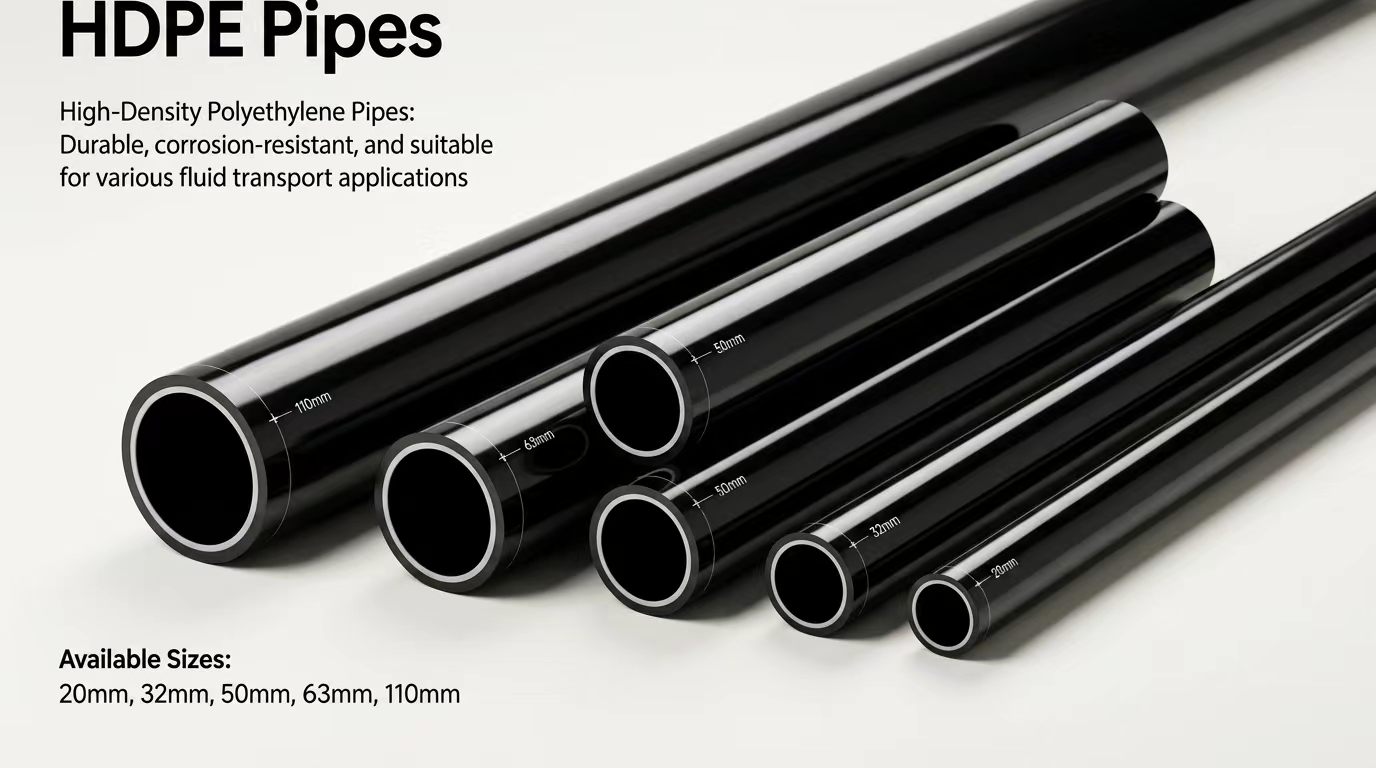
When you walk through new development zones in Jakarta, industrial parks in Ho Chi Minh City, or water network renovation sites in Manila, a common technical choice is emerging quietly. HDPE pipes (High-Density Polyethylene Pipe) are replacing traditional metal pipes and PVC pipes at an unprecedented speed, becoming the preferred material for infrastructure projects across Southeast Asia.
## The Driving Force Behind HDPE Adoption in Southeast Asia
According to the latest data from Fortune Business Insights, the global HDPE pipe market was valued at 24.44 billion US dollars in 2025 and is expected to exceed 37.93 billion US dollars by 2034, with a compound annual growth rate of 5.0%.
The Asia-Pacific region dominates the global market with a 46.84% market share. As one of the fastest-growing areas in the Asia-Pacific, Southeast Asia has become the core engine for the explosive growth in demand for HDPE pipes.
Based on four dimensions including policy-driven factors, material science advantages, regional market characteristics and competitive landscape, this article deeply analyzes the underlying logic behind the hot sales of HDPE pipeline solutions in Southeast Asia and provides practical market insights for industry practitioners.
1. Southeast Asia’s Infrastructure Boom: The Macro Background of Surging HDPE Pipe Demand
1.1 Surging Urbanization Rate and Water Crisis Force Pipeline Upgrading
Southeast Asia is undergoing one of the most rapid urbanization processes in human history. United Nations data shows that the urban population in Southeast Asia will increase by 250 million by 2030, which means tens of thousands of kilometers of new or renovated water supply, drainage and gas pipelines need to be built every year.
Taking the Philippines as an example, its rural water supply system has long been troubled by the “last mile” problem. Rugged terrain, high humidity and seismic activities make traditional galvanized steel pipes and cast iron pipes prone to corrosion and rupture.
With high ductility, HDPE pipes can bend without breaking in the event of ground displacement, perfectly adapting to the geological conditions of the Philippines.
1.2 Large-Scale Government-Led Infrastructure Plans
Governments of Southeast Asian countries are injecting strong impetus into the HDPE pipe market through national-level strategies:
– Indonesia: HDPE pipes are designated as standard materials for municipal water supply and drainage systems in the new capital Nusantara construction project. The total planned investment of Indonesia’s national strategic projects reaches 429 billion US dollars, and pipeline systems continue to drive demand as a major material category.
– Vietnam: The Long Son petrochemical complex added 1.65 million tons of ethylene production capacity per year in 2023, which has significantly improved local HDPE raw material supply capacity; infrastructure expenditure increased by 18% year-on-year in 2024, and HDPE pipes are widely used in drainage upgrading projects.
– Thailand: The Eastern Economic Corridor (EEC) specifies HDPE pipes as the standard material for industrial water lines.
– Philippines: JG Summit added 250,000 tons of HDPE production capacity in 2023. The Provincial Rural Water Supply Project clearly adopts PE100 grade HDPE pipes with a design life of 50 years.
2. Material Science Advantages of HDPE Pipes: Why They Are More Suitable for Southeast Asia Than PVC and Metal Pipes
2.1 Corrosion Resistance: The Ultimate Solution to Tropical Climate Challenges
The high temperature, high humidity and acidic soil in Southeast Asia pose fatal threats to traditional metal pipelines. The molecular structure of HDPE pipes provides absolute immunity to chemical corrosion, electrochemical corrosion and microbial corrosion. Certified by Environmental Product Declaration (EPD), the technical service life of HDPE water pipes exceeds 50 years.
2.2 Flexibility and Seismic Resistance: Lifeline for Seismic Belt Countries
Indonesia and the Philippines are located in the Pacific Ring of Fire with frequent ground displacement. The elongation at break of HDPE pipes exceeds 350%, while that of PVC pipes is only 2-5%. This means HDPE pipes can deform flexibly instead of rigidly breaking during earthquakes or foundation settlement.
2.3 Lightweight and Construction Efficiency: The Key to Reducing Comprehensive Costs
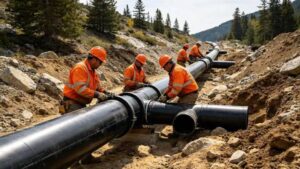
The density of HDPE pipes is between 0.941–0.965 g/cm³, and its weight is only 1/8 of that of steel pipes. In remote areas with inconvenient heavy machinery access such as outer islands of Indonesia and mountainous areas of the Philippines,6-meter-long DN200 pipes can be manually transported by two workers,
relying on support from a professional pipe manufacturing factory, while steel pipes of the same specification require lifting equipment. This logistical adaptability greatly reduces construction costs in remote areas.
2.4 Leak-Free Connection Technology: Solving the NRW (Non-Revenue Water) Crisis in Southeast Asia
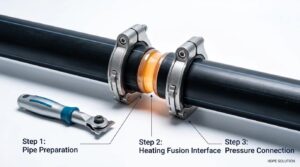
Cities in Southeast Asia generally face a pipeline leakage rate of 40-50%. Hot melt butt fusion and electrofusion connection technology of HDPE pipes realize zero-leakage joints.
Combined with its smooth inner wall with a Manning coefficient of 0.009, much lower than 0.013 of concrete pipes, it can effectively reduce pumping energy consumption and water leakage.
2.5 Extreme Temperature Adaptability
HDPE pipes can operate stably within the extreme temperature range of -50°C to 60°C, fully adapting to the diverse climatic conditions from high mountains to coastal areas in Southeast Asia.
3. In-Depth Analysis of National Markets: Differentiated Demand in Indonesia, Vietnam, the Philippines and Thailand
3.1 Indonesia: Logistics-Adapted Demand for Archipelagic Countries
As the world’s largest archipelagic country, pipeline transportation costs account for 25-35% of the total project cost in Indonesia. The coiled feature (small diameter) and lightweight advantage of HDPE pipes make it irreplaceable in outer-island projects such as Sulawesi and Kalimantan.
Key data: Indonesia accounted for 34.54% of the Southeast Asian plastic market in 2024, ranking among the fastest-growing countries.
The capacity expansion of Chandra Asri in 2024 and the advancement of the 10 billion US dollar ExxonMobil joint venture project have further consolidated Indonesia’s core position in the HDPE supply chain.
3.2 Vietnam: Industrial Pipeline Demand Driven by Manufacturing Transfer
Vietnam is undertaking global manufacturing transfer, with a booming number of factories in electronics, textile and semiconductor industries.
These industries put forward extremely high requirements for ultra-pure water transportation and chemical wastewater discharge pipelines. With excellent chemical inertness, PE100-grade high-density polyethylene pipelines have become the standard configuration for industrial parks.
The commissioning of Vietnam’s Long Son petrochemical complex not only reduces reliance on raw material imports, but also makes Vietnam one of the countries with the fastest growth in HDPE pipe production capacity in Southeast Asia.
3.3 Philippines: Resilient Infrastructure Choice for Rural Water Supply Renovation
The Provincial Rural Water Supply and Sanitation Project in the Philippines clearly selects HDPE pipes for three core reasons:
1. Earthquake resistance: adapting to frequent seismic activities in the Philippines
2. Maintenance-free: no replacement required within the 50-year design life
3. Sanitation and safety: non-fouling inner wall, meeting drinking water health standards
The new 250,000-ton HDPE production capacity of JG Summit has transformed the Philippines from a pure importer to a regional supply hub.
3.4 Thailand: Dual Driving Force of Smart Agriculture and Industrial Water Lines
Thailand’s government-led agricultural transformation has stimulated a sharp increase in demand for HDPE pipes in drip irrigation and sprinkler irrigation systems.
Meanwhile, industrial water line projects in the Eastern Economic Corridor take HDPE pipes as designated standard materials. Relying on the Map Ta Phut chemical hub, Thailand takes the lead in HDPE pipe technological innovation in the region.
4. Competitive Landscape: How HDPE Pipes Outperform PVC and Traditional Materials in Southeast Asia
At present, PVC still occupies 47-48% of the Southeast Asian plastic pipe market, relying on cost advantages.
However, HDPE pipes are rapidly replacing PVC in the following scenarios:
Comparison Dimension HDPE Pipes PVC Pipes
Large-Diameter Water Supply (>DN400) Support DN1200+ Production Limited Diameter
High-Pressure Gas Transportation PE100 Withstand 1.0MPa+ Pressure Not Applicable
Trenchless Construction Excellent Flexibility Brittle and Easy to Crack
Earthquake & Settlement Areas Elongation Over 350% Fragile Fracture
Service Life 50-100 Years 20-30 Years
Tensile Strength 20-30 MPa Low Performance
Compared with steel pipes and cast iron pipes, although the initial procurement price of HDPE pipes is 10-15% higher, its advantages of zero anti-corrosion maintenance, no cathode protection and low repair rate reduce the 50-year life cycle cost by 40-60%.
5. 2026 Market Outlook: Five Major Trends Defining the Future of HDPE Pipes
5.1 PE100-Grade Materials Become Mainstream
With higher pressure resistance and material saving advantages, PE100-grade HDPE pipes are replacing PE80 and becoming the unified standard for municipal engineering in Southeast Asia.
5.2 Breakthrough of PE-100-RC Crack-Resistant Pipeline Technology
The hydrogen energy network construction in Europe has spawned demand for PE-100-RC crack-resistant pipes. This technological trend will soon spread to Southeast Asia, especially in gas transportation and high-pressure water network fields.
5.3 Popularization of Electrofusion Welding Technology
With the densification and complication of urban pipe networks in Southeast Asia, electrofusion welding technology with high joint reliability is being forcibly promoted by international gas enterprises.
5.4 Acceleration of Localized Production
The commissioning of Vietnam’s Long Son petrochemical complex has greatly improved local HDPE production capacity in Southeast Asia. The 1 million-ton cracking unit of Lotte Chemical in Indonesia to be put into operation in the second half of 2025 will reshape the regional supply pattern and shorten the delivery cycle of large-scale projects.
5.5 Green Infrastructure Certification Drives Upgrading
Southeast Asian countries have included EPD environmental product declarations in government procurement thresholds.
With 100% recyclable performance and 60% lower carbon footprint than steel pipes, HDPE pipes gain advantages in ESG-compliant projects.
5.6 Intelligent Pipe Network Integration
Leading manufacturers are developing smart HDPE pipes embedded with RFID and optical fiber sensors to realize real-time leakage monitoring and pressure management, which will become the technological commanding height from 2026 to 2030.
6. Practical Suggestions for Industry Practitioners
6.1 Purchaser Checklist
– Confirm whether PE100-grade materials are required for high-pressure and large-diameter scenarios
– Require suppliers to provide ISO 4427 or AS/NZS 4130 certification
– Evaluate the technical support capacity of electrofusion welding equipment
– Focus on 50-year life cycle cost rather than only initial purchase price
– Pay attention to EPD environmental certification for ESG-compliant bidding projects
6.2 Market Entry Strategy for Exporters
1. Indonesia: Focus on outer-island water supply and gas projects, highlight logistics adaptability; seize new capital construction opportunities
2. Vietnam: Connect with industrial park EPC general contractors, emphasize chemical corrosion resistance; take advantage of local raw material costs
3. Philippines: Participate in WB/ADB-funded rural water projects, provide seismic-resistant technical solutions
4. Thailand: Target smart agricultural irrigation systems and EEC industrial water line upgrading needs
7. Conclusion: The Irreversible Boom of HDPE Pipes in Southeast Asia
The sales boom of HDPE pipes in Southeast Asia is not a short-term bubble, but an inevitable result of rigid urbanization demand, material iteration and climate adaptability.
From rural water networks in Manila to the new capital of Jakarta, from semiconductor factories in Ho Chi Minh City to smart farmland in Bangkok, HDPE pipes are building a resilient, efficient and sustainable fluid transportation network.
For building material exporters and engineering contractors, 2026 is a strategic window to deploy the Southeast Asian HDPE market. Enterprises that master PE100/PE-100-RC technology, build localized service networks and understand differentiated national demands will gain growth dividends in the next decade.all our products comply with international industry standards for plastic pipes,all our products comply with international industry standards for plastic pipes