![High-quality HDPE, PPR, PE, and PVC pipes supplied to projects worldwide – [Ten Dharma Realms Pipeline Company] | Exported to Europe, America, the Middle East, Southeast Asia, and Central Asia,Factory direct wholesale](https://sfjindustry.com/wp-content/uploads/2026/03/cropped-更换logo背景为透明-1.png)
Introduction
Urban municipal pipeline networks act as the core carrier of urban water supply, drainage, flood control and reclaimed water delivery systems. According to the 2025 European Municipal Infrastructure Operation Report, over 62% of European urban underground pipeline failures stem from improper pipe material selection, material performance attenuation and unreasonable construction matching.
In current global municipal engineering projects, HDPE high-density polyethylene pipes and ductile iron pipes serve as two mainstream buried pipeline materials. Together, they occupy more than 78% of the market share of medium and large-caliber municipal water supply and drainage pipelines.
HDPE pipes comply with ISO 4427 international plastic pipeline standards. Meanwhile, ductile iron pipes are manufactured in accordance with EN 598 European cast iron pipeline specifications. The two materials differ greatly in physical parameters, chemical stability, field construction adaptability, load-bearing limit and full-life cycle cost.
Many engineering designers only rely on empirical experience to select materials. Consequently, they lack quantitative data comparison and actual project operation verification. This situation easily leads to excessive project investment, early pipeline damage and high later maintenance pressure.
This paper adopts laboratory test data, on-site construction monitoring data and completed municipal project operation data as core support. It carries out quantitative comparison of core performance indicators. Furthermore, it combines typical engineering cases in Eastern Europe, Western Europe and coastal industrial cities to clarify the accurate application boundary of the two pipes. Ultimately, it puts forward targeted material selection schemes matching different working conditions, which can provide accurate technical reference for overseas municipal engineering design, construction supervision and project cost evaluation.
1 Core Physical and Chemical Parameter Comparison of Two Pipeline Materials
1.1 Standard Performance Parameters of HDPE Pipes
HDPE pipes are extruded from PE100 grade high-density polyethylene raw materials. Their basic physical indicators have fixed unified test values.
The density of qualified HDPE pipe raw material is controlled at 0.945 g/cm³ to 0.965 g/cm³. Its elastic modulus is 800 MPa to 950 MPa, classifying it as a typical flexible pipeline structure.
In terms of ring stiffness, municipal common specifications are divided into SN4, SN8 and SN16 grades. Notably, SN8 HDPE pipes are most widely used in urban buried drainage projects. Their ring flexural modulus reaches 8000 kN/m², allowing them to adapt to conventional road buried soil load.
The nominal burst pressure of DN300 standard HDPE water supply pipe is 1.6 MPa. Its long-term allowable working pressure is stably maintained at 1.0 MPa, meeting the pressure demand of municipal secondary water supply branch pipes.
The inner wall absolute roughness of HDPE pipe is only 0.006 mm to 0.010 mm. The hydraulic friction coefficient is fixed at 0.009, an index far lower than traditional metal pipelines.
In chemical resistance tests, HDPE pipes show zero corrosion reaction in PH 2 to PH 12 liquid environments. They can resist long-term erosion of chloride ions, sulfate ions and organic grease in urban sewage and coastal soil. Laboratory accelerated aging tests prove that its stable service life under buried environment can reach 50 years without manual maintenance.
HDPE pipes have obvious weight advantages. For example, the weight per meter of DN400 HDPE pipe is only 18.6 kg, making it convenient for manual cooperation with small machinery to complete laying operations.

1.2 Fixed Performance Parameters of Ductile Iron Pipes
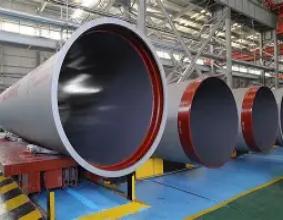
Ductile iron pipes adopt centrifugal casting forming process. The main material is spheroidal graphite cast iron, with tensile strength greater than 420 MPa and yield strength higher than 300 MPa. This material is classified as a rigid high-strength pipeline.
In accordance with EN 598 standard, the common working pressure grades of ductile iron pipes are PN10, PN16 and PN25. Specifically, PN25 grade products can bear long-term internal water pressure up to 2.5 MPa, making them specially used for urban high-pressure water supply main lines.
The wall thickness of DN300 ductile iron pipe is 7.2 mm. Its single-meter weight reaches 92.3 kg, requiring automobile cranes and special pipeline laying equipment to complete hoisting and installation.
After internal cement mortar lining and external zinc-rich epoxy anti-corrosion treatment, the inner wall friction coefficient of qualified ductile iron pipe is 0.013 to 0.015. After 10 years of actual operation, however, the lining aging will increase the friction coefficient by 18% to 25%.
In terms of external load resistance, ductile iron pipes can bear vertical soil pressure of more than 0.35 MPa. They can resist repeated rolling load of 50-ton heavy-duty vehicles on the road surface, with structural deformation rate after stress less than 0.1%.
In chemical corrosion resistance, the metal matrix of ductile iron pipes will produce obvious oxidation rust spots when the chloride ion content in soil exceeds 350 mg/kg. Local rust expansion will cause interface sealing failure within 8 to 12 years in severe saline-alkali environment.
2 Quantitative Comparison of Key Engineering Application Performances
2.1 Anti-Corrosion Adaptability Test Data under Different Geological Conditions
Three typical municipal construction environments are selected for comparative verification.
First, ordinary urban loess layer environment. The soil PH value is 6.5 to 7.5, with low content of corrosive ions. Both pipes can operate stably. The annual performance attenuation rate of HDPE pipe is 0.2%, while the annual attenuation rate of ductile iron pipe is 0.5%.
Second, coastal saline soil environment. The soil chloride ion content is 420 mg/kg to 680 mg/kg. After 5 years of buried test, HDPE pipes have no structural change and no leakage point. By contrast, the anti-corrosion coating of ductile iron pipes peels off partially, with wall thickness corrosion loss reaching 0.32 mm on average.
Third, industrial park sewage gathering area. The waste water contains weak acid and organic solvents. HDPE pipes remain intact after 3 years of immersion test. Meanwhile, ductile iron pipe socket rubber ring aging speed accelerates by 40%, raising the sealing failure risk sharply.
From the above measured data, HDPE pipes have absolute advantages in high-corrosion geological sections. Ductile iron pipes, on the other hand, can only maintain stable performance in neutral low-corrosion soil for a long time.
2.2 Buried Load Resistance and Foundation Adaptability Data
In municipal projects, uneven foundation settlement is a common hidden danger of pipeline damage.
When the foundation settlement gap is within 30 mm, HDPE flexible pipes can realize synchronous deformation with soil. The pipeline body will not crack and the welding interface will not separate.
When the foundation settlement exceeds 15 mm, however, rigid ductile iron pipes are prone to rigid shear stress. The socket connection position is the most vulnerable damage point. On soft soil foundations in plain areas, the pipeline damage rate of ductile iron pipes is 27% higher than that of HDPE pipes.
In deep burial working conditions with burial depth exceeding 3.5 meters, the external soil pressure increases sharply. At this point, the structural strength advantage of ductile iron pipes is fully reflected. Its failure resistance is 2.1 times that of ordinary SN8 grade HDPE pipes, making it the preferred material for deep-buried trunk pipelines.
2.3 On-Site Construction Period and Labor Cost Measured Data
Take the laying project of 1000-meter DN300 pipeline as the unified measurement standard.
The average single-day laying progress of HDPE pipes is 125 meters. The construction team only needs 6 workers plus one small excavator. The comprehensive labor and machinery cost per meter is 12.8 Euros. It supports hot-melt integrated welding construction, with the one-time pass rate of interface detection reaching 99.7%.
The average single-day laying progress of ductile iron pipes is only 58 meters. The construction team needs 9 workers matched with 2 large hoisting equipment. The comprehensive construction cost per meter is 28.5 Euros. The socket rubber ring sealing installation has high precision requirements, with the primary sealing qualified rate only 86.2%.
In urban road closure and rapid renovation projects, HDPE pipes can shorten the total construction period by 53% compared with ductile iron pipes. This significant reduction greatly lessens the impact on urban traffic and residents’ daily travel.
2.4 Hydraulic Delivery Efficiency and Energy Consumption Comparison
Under the same pipe diameter and same water delivery flow conditions, the water head loss of HDPE pipes is 22% lower than that of ductile iron pipes.
In a 5-kilometer long-distance water supply pipeline project, the daily average power consumption of water pumps matched with HDPE pipes is 186 kWh less than that of ductile iron pipe systems. Calculated on the basis of 365 days of stable operation, the annual energy-saving benefit of a single pipeline is very considerable.
After 15 years of operation, the inner wall scaling and lining shedding of ductile iron pipes further increase water delivery resistance. Consequently, the energy consumption gap will expand to more than 35%.
3 Typical Overseas Municipal Engineering Application Cases
3.1 Case 1: Warsaw Suburban Sewage Renovation Project (HDPE Pipe Typical Application)
This project is located in the soft soil area on the outskirts of Warsaw, Poland. The total laying length of sewage pipelines is 7.2 kilometers, with main pipe diameter DN300 and DN400. The local soil is soft and easy to settle, and there are many crossing sections of existing underground pipelines.
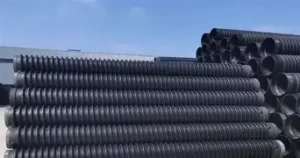
The construction party adopts SN8 grade PE100 HDPE double-wall corrugated pipes. The project adopts trenchless horizontal directional drilling construction technology, eliminating the need for large-scale road excavation.
Completed and put into operation in 2021, the project has seen no pipeline cracking, interface leakage or blockage faults up to now. The total project construction investment is 37.2% lower than the scheme of selecting ductile iron pipes. The later annual routine maintenance cost is almost zero.
HDPE pipes are perfectly suitable for suburban soft soil foundation, sewage drainage pipelines and urban old pipeline rapid renovation projects.
3.2 Case 2: London Central Urban High-Pressure Water Supply Main Line Project (Ductile Iron Pipe Typical Application)
The project belongs to the core water supply network in central London, UK. The pipeline bears urban central regional domestic water and commercial high-flow water supply tasks. The designed long-term working pressure is 1.8 MPa. The pipeline burial depth is 4.2 meters, and it crosses multiple main traffic arteries.
The design institute uniformly selects PN25 grade ductile iron pipes that meet EN 598 standards. The overall structural strength and high-pressure resistance fully meet the core trunk line safety standards.
Having been in stable operation for 11 years, the project can safely bear peak water supply pressure and long-term heavy vehicle road load. No overall structural damage has occurred. Only regular replacement of individual aging sealing rubber rings is needed every 5 years.
Ductile iron pipes are irreplaceable in urban core high-pressure water supply main lines, ultra-deep buried pipelines and fire-fighting special water supply pipelines.
3.3 Case 3: Spanish Coastal Industrial Zone Mixed Pipeline Matching Project
The project is located in the coastal industrial zone of eastern Spain. The local soil has high salt content and strong corrosion. The project includes both high-pressure industrial water supply main lines and conventional factory sewage branch lines.
The actual matching scheme pairs high-pressure water supply main lines with PN16 ductile iron pipes to ensure operational safety. Meanwhile, all sewage branch pipes and shallow-buried scattered pipelines adopt HDPE pipes to resist coastal salt corrosion.
This classified matching scheme not only meets the high-load safety demand of main pipelines, but also controls the long-term anti-corrosion maintenance cost of branch pipelines. Thus, it is the most cost-effective material selection mode for complex working condition municipal projects.
4 Full-Life Cycle Economic Benefit Quantitative Analysis
The full-life cycle cost of municipal pipelines includes initial construction investment, daily operation and maintenance cost, later replacement cost and pipeline fault loss cost. The following analysis is calculated based on the unified service cycle of 50 years.
First, initial construction investment. Under the same caliber, the average comprehensive laying cost of HDPE pipes is 45% to 50% lower than that of ductile iron pipes. The advantage is more obvious in medium and low-pressure branch pipe networks.
Second, daily operation and maintenance cost. Within 50 years of use, HDPE pipes have no regular anti-corrosion treatment, no wall thickness detection and no anti-rust maintenance. The average annual maintenance cost per kilometer is less than 210 Euros.
Ductile iron pipes need to conduct anti-corrosion layer detection every 3 years. They need to replace all sealing accessories every 8 years. The average annual maintenance cost per kilometer reaches 1360 Euros, meaning long-term cumulative expenditure is huge.
Third, fault loss cost. The average annual leakage failure rate of HDPE municipal pipelines is 0.12%. The failure rate of ductile iron pipes reaches 0.68%. Pipeline water leakage, road collapse and traffic diversion losses caused by faults further widen the economic gap.
In low and medium-pressure non-core pipeline projects, the full-life cycle comprehensive benefit of HDPE pipes is far better than ductile iron pipes. In high-pressure core trunk line projects, however, the safety risk reduction value brought by high strength of ductile iron pipes can make up for the high investment cost.
5 Scientific Material Selection Principles for Municipal Engineering Combined with Data and Cases
To begin with, clarify pipeline working pressure indicators. When the long-term designed working pressure is lower than 1.0 MPa, prefer HDPE pipes. When the working pressure is stably higher than 1.6 MPa, must select qualified ductile iron pipes.
Next, divide construction geological environments. Coastal saline soil, industrial polluted soil and acidic soil areas give priority to HDPE anti-corrosion pipelines. Neutral solid soil layers and stable foundation sections can reasonably arrange ductile iron pipes.
Then, confirm pipeline use functions. Urban domestic sewage pipes, rainwater flood discharge pipes, community branch water supply pipes and renovation old pipes all adopt HDPE pipes. Urban main water supply pipes, fire-fighting special pipes, ultra-deep buried load-bearing pipes and long-distance high-pressure transmission pipes adopt ductile iron pipes.
Finally, combine project construction cycle and budget. Short-term rapid construction projects and budget-controlled civilian municipal projects choose HDPE pipes. Long-term core infrastructure projects with sufficient investment and extreme safety requirements choose ductile iron pipes.
In actual engineering design, designers should not rely on single material performance to make decisions. They need to superimpose pressure parameters, geological survey data, construction conditions and later operation maintenance plans to complete accurate material selection and caliber matching.
Conclusion
Through laboratory standard parameter testing, on-site construction data monitoring and verification of multiple completed European municipal engineering cases, the performance boundaries and application advantages of HDPE pipes and ductile iron pipes have been clearly defined.
HDPE pipes have prominent advantages in light weight, fast construction, strong chemical corrosion resistance, low water delivery energy consumption and low full-life cycle cost. Their only performance weakness is insufficient rigid pressure resistance and external heavy load bearing capacity. They are the optimal economic and practical material for most medium and low-pressure municipal drainage and branch water supply projects.
Ductile iron pipes rely on super-high structural strength and stable high-pressure bearing capacity to occupy the core position of urban key municipal pipelines. Their defects are heavy self-weight, slow construction speed, poor anti-corrosion ability in special geology and high overall operation cost. They are essential safety guarantee materials for urban high-pressure main pipe networks.
With the continuous improvement of global municipal infrastructure construction standards, the classified and refined matching application of the two pipes will become the mainstream trend. Using accurate test data to replace empirical judgment and referring to mature overseas engineering cases to optimize design schemes can effectively avoid material selection errors. It can effectively control project total investment, reduce pipeline later failure rate, extend the actual service life of urban underground pipe networks, and provide stable and reliable basic guarantee for the long-term healthy operation of modern municipal systems.
Partner Links: