![High-quality HDPE, PPR, PE, and PVC pipes supplied to projects worldwide – [Ten Dharma Realms Pipeline Company] | Exported to Europe, America, the Middle East, Southeast Asia, and Central Asia,Factory direct wholesale](https://sfjindustry.com/wp-content/uploads/2026/03/cropped-更换logo背景为透明-1.png)
Introduction
Municipal engineering is the core foundation of urban infrastructure construction. It covers urban water supply network, rainwater drainage system, sewage discharge pipeline, community supporting water system and public water conservancy supporting projects. All these infrastructure projects rely heavily on high-performance plastic pipelines to complete long-distance water transmission and fluid delivery work.
Nowadays, plastic pipes have gradually replaced traditional cast iron pipes and cement pipes in global municipal construction. They own lighter weight, better anti-corrosion property and lower overall application cost. Among numerous plastic pipe products, PVC pipes and PPR pipes are the two most widely used types in the construction market.
A large number of engineering contractors, project designers and bulk procurement merchants often face difficult choices in actual project planning. They need to confirm which kind of pipe is more in line with the construction standard, environmental conditions and long-term operation demands of local municipal projects.
In fact, PVC pipes and PPR pipes have their own unique advantages and inherent limitations. Neither of them can fully adapt to all types of municipal engineering scenarios. Blind selection will lead to many practical problems in the later stage. It may cause slow construction progress, increased maintenance costs, shortened pipeline service life, and even hidden safety hazards in urban water use.
In addition, different regions have different climate characteristics, geological conditions and project budget standards. These external factors will also greatly affect the final use effect of the two kinds of pipelines. Therefore, it is very necessary to carry out an all-round and in-depth comparison between PVC pipes and PPR pipes.
This article will start from raw material characteristics, physical performance parameters, field construction conditions, market procurement cost, later maintenance difficulty and actual application scenarios. It will conduct systematic sorting and detailed analysis. Meanwhile, it will put forward targeted selection suggestions suitable for different municipal engineering projects. Readers can refer to the content to formulate more scientific and reasonable pipeline matching schemes according to their own project situations.
1. Basic Material Characteristics of PVC Pipes and PPR Pipes
1.1 Raw material composition and production technology of PVC pipes
PVC pipe is short for polyvinyl chloride pipe. Its main production raw material is polyvinyl chloride resin. In the formal industrial production process, manufacturers will add a reasonable proportion of heat stabilizers, impact modifiers, lubricants and anti-aging auxiliary materials.
After full mixing at constant high temperature, the mixed raw materials are extruded and shaped by professional pipe making equipment. After fixed-length cutting, surface polishing and quality inspection, qualified finished PVC pipes are finally produced.
The whole production flow of PVC pipes is mature and simple. The technical threshold for mass production is relatively low. Besides, the supply of PVC raw materials in the global building materials market is very sufficient. Therefore, the market output of PVC pipes has always remained at a high level.
In municipal engineering application, hard PVC pipes are the most mainstream type. This kind of pipe has compact internal structure and high overall hardness. It can bear strong external extrusion force in the buried laying environment.
From the perspective of material chemical property, PVC material has stable acid-base resistance. It will not easily react with most soil components, domestic sewage and common industrial wastewater. This basic property lays a solid foundation for its wide application in urban sewage discharge projects.
Nevertheless, traditional ordinary PVC materials have obvious defects in high temperature resistance. When the external ambient temperature continues to rise, the pipe body is easy to soften and deform. This shortcoming also limits its application scope in high-temperature areas.
1.2 Raw material composition and production technology of PPR pipes
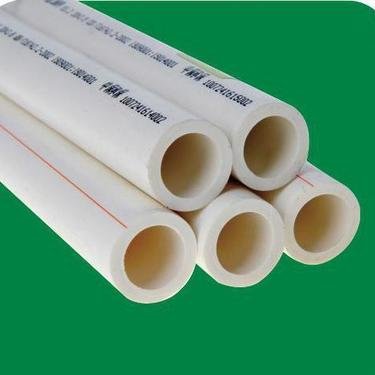
PPR pipe is named as random copolymer polypropylene pipe. Its core raw material is food-grade polypropylene random copolymer resin. Compared with PVC raw materials, the purity standard of PPR raw materials is stricter.
All qualified PPR pipe raw materials do not contain heavy metal components and harmful chemical additives. So they will not produce harmful substances to pollute water quality in the process of conveying drinking water. This is also the core advantage of PPR pipes different from ordinary plastic pipes.
The production process of PPR pipes is far more refined than that of PVC pipes. The whole production link needs to strictly control the melting temperature, extrusion speed and cooling forming speed. Any slight deviation in parameters will directly affect the wall thickness uniformity and internal structural stability of finished pipes.
In order to meet the demand of hot water transmission, most PPR pipes on the market have added special temperature-resistant formula in the production stage. After special process treatment, the pipe body can keep stable physical state in long-term hot water circulation environment.
In terms of material texture, PPR pipes are lighter and more flexible. The overall toughness is far better than ordinary hard PVC pipes. When subjected to slight external impact, it is not easy to crack and damage. But in the low temperature freezing environment, its toughness will drop sharply, and it is easy to become brittle and fragile.
1.3 Essential material differences affecting practical use
First of all, in terms of environmental protection level, PPR pipes are obviously superior to ordinary PVC pipes. Food-grade PPR materials fully meet the international drinking water transportation safety standards. They can be directly used for the laying of domestic drinking water pipelines. Most ordinary PVC pipes are only suitable for non-drinking fluid transportation.
Secondly, in terms of material density and weight, PVC material has higher density, so the same specification of PVC pipe is heavier than PPR pipe. In the process of long-distance transportation and on-site handling, PPR pipes can effectively save labor and transportation costs.
Furthermore, in terms of material aging resistance, modified PPR pipes added with anti-aging agents can resist ultraviolet radiation for a long time. While common PVC pipes are easy to age and fade when exposed to the sun for a long time, and their service life will be greatly shortened.
In general, the essential differences in raw material components and production processes have fundamentally determined the different performance orientations and applicable boundaries of these two kinds of pipelines in municipal engineering.
2. Detailed Comparison of Core Physical Performance
2.1 High and low temperature resistance performance comparison
Temperature resistance is one of the most core performance indicators for municipal pipeline selection. It directly determines whether the pipeline can operate stably all year round in different seasonal environments.
PVC pipes belong to typical low-temperature preferred pipeline products. Their long-term stable working temperature is controlled within a low range. When the conveyed water temperature exceeds the safe standard or the external ambient temperature is too high, the pipe wall will gradually soften. Then it is easy to appear bending deformation and internal diameter shrinkage, which seriously affects the normal efficiency of water delivery.
For this reason, PVC pipes are rarely used in outdoor open-air hot water transmission projects. They are more suitable for laying in cool underground soil layers and low-temperature fluid conveying pipelines. In addition, in the severe cold winter environment, ordinary PVC pipes also have the risk of freezing and cracking.
On the contrary, PPR pipes have outstanding high temperature resistance. Standard qualified PPR pipes can continuously convey hot water within the specified temperature range. Even in the high temperature environment in summer, the overall structure of the pipe body will not change obviously. It can maintain stable water supply capacity for a long time.
But it is undeniable that the low temperature resistance of PPR pipes is a major weakness. In northern regions with extremely cold climate, if PPR pipes are not equipped with complete thermal insulation measures, they are very easy to crack after being frozen for a long time. This will cause pipeline rupture and water leakage accidents.
Therefore, in the design of municipal pipeline layout, local annual average temperature and extreme temperature data must be combined to select pipelines with matching temperature resistance performance.
2.2 Internal and external pressure bearing capacity comparison
Municipal pipelines need to bear two kinds of pressure for a long time. One is the external soil covering pressure and ground rolling pressure after buried laying. The other is the internal water flow impact pressure generated in the process of fluid transmission.
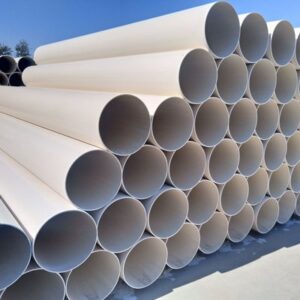
In terms of external pressure resistance, reinforced thick-walled PVC pipes have great advantages. After being buried under urban roads and sidewalks, they can bear the rolling pressure of vehicles and the heavy pressure of thick soil layers. They are not easy to collapse and deform, and can keep the pipeline passage unobstructed for a long time.
This performance makes PVC pipes become the preferred pipe type for urban road drainage and underground buried large-scale sewage main pipes. It can adapt to complex external stress environments in municipal construction.
In terms of internal pressure bearing, the design standard of PPR pipes is mainly oriented to household and small-scale building water supply. Its internal pressure bearing value can fully meet the daily domestic water transmission demand. However, it is difficult to meet the high-pressure delivery demand of large-flow municipal main water supply pipelines.
If PPR pipes are forcibly used for long-distance and large-volume municipal water transmission, pipeline expansion and water flow backflow are easy to occur. It will not only reduce the water delivery efficiency, but also accelerate the aging speed of the pipe body.
To sum up, PVC pipes are more suitable for scenes requiring strong external pressure resistance, while PPR pipes are more suitable for low-pressure and stable internal water delivery scenes.
2.3 Anti-corrosion and anti-scaling comprehensive ability
Traditional metal pipelines are easy to rust and corrode after being used underground for a long time. They will also produce thick water scale on the inner wall, which affects the water delivery effect. Both PVC pipes and PPR pipes have completely got rid of these troubles.
First of all, in terms of anti-corrosion ability, PVC pipes have stronger tolerance to acid and alkali wastewater. In urban domestic sewage, kitchen wastewater and part of light industrial wastewater discharge environment, PVC pipes can resist chemical erosion for a long time. The pipe wall will not be corroded and perforated easily.
PPR pipes have stable corrosion resistance to clean neutral water quality. They are very suitable for the transmission of tap water and purified domestic water. But when facing high-concentration acid and alkali wastewater, its anti-corrosion effect is not as good as PVC pipes.
In terms of anti-scaling performance, the inner walls of both pipes are smooth and flat. There is no uneven bulge and rough gap. In the process of long-term water flow passing, it is difficult for impurities and mineral components in the water to adhere and deposit. So it can effectively avoid pipeline blockage caused by thick water scale.
In addition, both kinds of plastic pipes do not have the problem of rust falling off. They can keep the water delivery environment clean and stable for a long time, which is far better than metal pipelines in long-term use effect.
2.4 Connection sealing and overall stability
The connection mode directly affects the overall sealing performance and service life of the whole pipeline network. Different pipeline products adopt different fixed connection technologies.
Most municipal PVC pipes adopt socket glue bonding connection. The operation steps of this connection method are simple and easy to master. After the special pipeline glue is evenly coated and fully solidified, the joint gap can be completely filled. The overall sealing performance is excellent, and it can effectively prevent sewage leakage and rainwater overflow.
Besides, the matching pipe fittings of PVC pipes are complete in specifications and diverse in types. It can meet various turning, shunting and straight-through connection demands in municipal pipeline layout.
PPR pipes adopt hot melt integrated welding connection. After heating the pipe mouth and pipe fittings to the specified temperature, they are quickly butted and cooled to form an integrated whole. There is almost no gap at the connection position. The sealing performance is top-grade, and it will not leak water easily in the process of cold and hot water alternate circulation.
But the shortcoming of hot melt connection is also very obvious. It needs professional hot melt equipment and experienced construction workers. The control of heating temperature and docking time is very strict. Once the operation is improper, it will cause hidden dangers of virtual welding and water leakage at the joint.
3. On-site Construction and Installation Practical Analysis
3.1 Construction operation difficulty and progress speed
In large-scale municipal engineering projects, construction progress is often one of the key assessment indicators. The construction difficulty of pipelines directly affects the overall project completion cycle.
The construction threshold of PVC pipes is very low. The pipe body is hard and easy to cut. Construction workers can quickly cut pipes of corresponding lengths according to the actual laying distance on site. Meanwhile, the bonding connection process does not need to be equipped with a large number of professional mechanical equipment.
Ordinary construction personnel can be proficient in installation skills after simple training. Therefore, when laying PVC pipes in batches, the overall construction speed is fast, which can greatly shorten the project construction period and effectively save on-site labor costs.
In contrast, the construction operation standard of PPR pipes is higher. The whole hot melt welding process needs real-time temperature monitoring. The heating time and docking depth must be operated in strict accordance with the construction specifications.
In the complex municipal construction site with many cross operations, the installation efficiency of PPR pipes will be obviously reduced. A large number of pipe docking work will consume more working hours and human resources. To a certain extent, it will slow down the overall construction rhythm of the project.
3.2 Adaptation degree of different construction environments
The construction environment of municipal engineering is complex and changeable. There are open field barren land, urban road foundation, dense building groups and low-lying muddy areas. Different environments put forward different requirements for pipeline performance and installation conditions.
PVC pipes have strong environmental adaptability. They can be constructed normally in humid, muddy and open-air exposed environments. The glue bonding process will not be affected by slightly humid weather. Moreover, the hard pipe body can resist the collision and extrusion of on-site construction machinery, and the damage rate during construction is low.
Therefore, PVC pipes are widely used in outdoor municipal pipeline laying projects with harsh environmental conditions.
PPR pipes are more suitable for relatively closed and stable construction environments. For example, indoor building pipe wells, closed underground pipe ditches and centralized residential area water supply pipe networks. In these stable environments, PPR pipes can give full play to their advantages of heat resistance and safe water delivery.
However, in the wild construction sites with frequent mechanical activities and frequent external impact, PPR pipes are easy to have local cracks and pipe body damage, which increases the construction loss cost virtually.
3.3 Later pipeline maintenance and replacement difficulty
Perfect municipal pipeline projects must take the later daily maintenance and emergency repair work into consideration in the early design stage. Simple maintenance operation can reduce the long-term operation cost of urban infrastructure.
The layout of PVC drainage pipelines is neat and regular. When local pipeline blockage, fracture and leakage faults occur, engineering maintenance personnel can quickly locate the fault position. Local cutting and replacement of single pipeline can complete the maintenance work. There is no need to dismantle a large area of pipeline network.
Moreover, PVC pipe fittings are sold everywhere in the market. The procurement channels are smooth, and the replacement cost of accessories is very low. The overall investment of later daily maintenance is controlled at a low level.
Due to the integrated hot melt welding connection of PPR pipes, the connectivity of the whole pipeline network is too strong. Once a certain section of pipeline is damaged, it often needs to replace a long section of connected pipelines. The maintenance scope is large, and the construction difficulty is increased accordingly.
In addition, some special-specification PPR pipe fittings have single market supply channels. The procurement cycle is longer than that of PVC accessories, which will slightly delay the progress of emergency maintenance work.
4. Market Procurement Cost and Budget Matching Analysis
4.1 Finished product market price difference
From the perspective of the global building materials wholesale market, the market unit price of PVC pipes has always maintained a relatively low level. Sufficient raw material supply and mature mass production mode make its production profit space stable and the sales price close to the people.
When municipal engineering projects carry out large-scale bulk procurement, choosing PVC pipes can directly reduce the total material procurement expenditure. This is very friendly for those municipal supporting projects with limited overall investment and tight budget.
The production cost of PPR pipes is higher than that of PVC pipes. High-purity raw materials, refined production processes and strict quality inspection standards all increase the comprehensive production cost. Therefore, the terminal sales price of PPR pipes in the market is generally higher than that of PVC pipes of the same specification.
If a large number of PPR pipes are used in municipal projects, the total material cost will rise significantly. It will bring greater capital budget pressure to project investors and construction parties.
4.2 Full-cycle comprehensive use cost comparison
When calculating the actual use cost of pipelines, we cannot only focus on the one-time procurement price. We need to comprehensively calculate transportation cost, installation labor cost, later maintenance cost and pipeline renewal replacement cost.
In terms of transportation cost, PVC pipes are heavy, but they have strong compression resistance and are not easy to be damaged during transportation. PPR pipes are light in weight and convenient for stacking and loading. The long-distance bulk transportation cost is lower.
In terms of installation labor cost, the simple installation process of PVC pipes requires less skilled workers, and the overall labor expenditure is lower. The installation of PPR pipes needs professional technical workers, and the labor remuneration standard is relatively higher.
In terms of long-term use cost, high-quality PPR pipes have a longer service life in clean water supply environments. The frequency of daily failure and later replacement is low, which can save a part of long-term pipeline renewal investment. While low-cost ordinary PVC pipes need regular inspection and maintenance in sewage discharge environments.
4.3 Reasonable budget matching suggestions
For civil public welfare municipal projects, rural water conservancy renovation projects and urban rainwater and sewage diversion projects with general budget standards, priority should be given to high-quality qualified PVC pipes to control the overall project cost.
For high-standard residential community supporting water supply projects, urban public living service facilities and drinking water direct transmission projects with sufficient project funds, we can properly allocate high-quality PPR pipes to ensure the safety and stability of water use.
5. Dominant Application Scenarios in Municipal Engineering
5.1 Main applicable fields of PVC pipes
First of all, urban municipal main sewage discharge pipelines are the core application scene of PVC pipes. A large number of underground buried sewage transmission pipelines in cities choose reinforced PVC pipes as the main pipeline materials.
Secondly, urban road rainwate
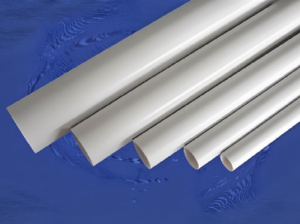
r collection and drainage pipelines are also inseparable from PVC pipes. This kind of pipeline needs to discharge rainwater quickly and bear road pressure. The performance of PVC pipes can fully meet the actual use demands.
Thirdly, farmland water conservancy irrigation pipelines and rural municipal water diversion supporting pipelines are also important application fields of PVC pipes. The wide laying range and large demand quantity can well highlight its cost performance advantage.
Fourthly, municipal cable protection sleeves and pipeline penetration protection pipelines also often use hard PVC pipes. Its hard texture can play a good isolation and protection role for internal lines.
5.2 Main applicable fields of PPR pipes
First, urban residential community indoor and outdoor supporting domestic drinking water supply pipelines are the most common application scenes of PPR pipes. It can ensure the safety and sanitation of domestic water for residents.
Secondly, internal cold and hot water conveying pipelines of large public buildings such as hospitals, schools, shopping malls and office buildings are also suitable for laying with PPR pipes. It meets the unified water supply demand of public places.
Fourthly, high-standard drinking water direct delivery projects with extremely strict water quality requirements must adopt food-grade PPR pipes to avoid water quality secondary pollution.
5.3 Mixed collocation application mode of two pipelines
In most large-scale comprehensive municipal engineering projects, construction designers will not use a single type of pipeline in a unified way. Instead, they adopt a scientific mixed laying mode according to different functional divisions.
Outdoor buried sewage pipelines, rainwater pipelines and ground drainage pipelines all adopt high-strength anti-pressure PVC pipes. Indoor building internal domestic water supply pipelines and hot water circulation pipelines adopt safe and environment-friendly PPR pipes.
This collocation method can not only effectively control the overall construction cost of municipal projects, but also ensure that all kinds of pipelines can operate in the most suitable working environment. It is also the most mainstream and mature pipeline selection scheme in the current municipal construction industry.
6. Scientific and Practical Pipeline Selection Principles
6.1 Select pipelines according to pipeline functional purposes
If the main function of the project pipeline is to collect rainwater, discharge domestic sewage and transport various non-drinking wastewater, we should firmly choose PVC pipes. Its performance parameters and cost positioning are highly matched with drainage project demands.
If the pipeline is specially used for conveying resident drinking water, and it needs to stably convey high-temperature hot water for a long time, then PPR pipes are more in line with engineering design standards and daily safe water use demands.
6.2 Select pipelines according to actual laying environment
When the pipeline needs to be buried deeply in the soil layer, laid beside urban roads, and bear strong external extrusion and rolling pressure, we should give priority to PVC pipes with strong external pressure resistance.
When the pipeline is laid in closed pipe ditches, indoor pipe wells and environments with stable temperature and no obvious external impact, we can arrange PPR pipes for laying and use.
6.3 Select pipelines according to local regional climate features
In tropical and subtropical regions with high annual average temperature, we should reduce the large-scale laying of ordinary low-temperature-resistant PVC pipes. Appropriately increase the laying proportion of heat-resistant modified PPR pipes to adapt to high-temperature environmental operation.
In northern cold regions with long-term severe cold and freezing weather, we should reduce the outdoor large-scale use of PPR pipes which are easy to become brittle at low temperature. We choose anti-freeze modified PVC pipeline products with stronger low-temperature tolerance.
6.4 Select pipelines according to project grade and budget
For ordinary grassroots municipal infrastructure projects with general construction standards and limited total budget, qualified PVC pipes with stable quality are taken as the main selection direction.
For high-grade municipal supporting projects with high construction standards, sufficient capital investment and long-term service life planning, increase the use proportion of environment-friendly and high-performance PPR pipes reasonably.
7. Overall Conclusion and Industry Development Prospect
After comprehensive multi-dimensional comparison and practical scene analysis, we can clearly draw a definite conclusion. There is no absolute good or bad between PVC pipes and PPR pipes used in municipal engineering construction. The core of correct selection is to match appropriate pipeline products according to the actual demands of the project itself.
PVC pipes occupy an irreplaceable core position in the field of municipal drainage and water conservancy projects. It has obvious advantages in external pressure resistance, on-site construction efficiency, market popularization degree and comprehensive procurement cost. It is the most cost-effective preferred pipe type for most urban drainage and water diversion projects.
PPR pipes rely on excellent food-grade safety performance, stable high temperature resistance and integrated sealing connection effect. It has become the mainstream pipeline material for urban domestic clean water supply systems. It plays an important role in ensuring residents’ safe water use and improving the quality of living supporting facilities.
In the actual municipal engineering design and construction work, engineering technicians need to sort out all functional demands of the project in advance. They need to combine local geological conditions, annual climate changes, project construction standards and total investment budget to make the final pipeline selection decision.
Only by selecting pipelines in a targeted manner can we ensure the smooth progress of municipal engineering construction tasks. At the same time, it can lay a solid and reliable foundation for the long-term stable operation, daily maintenance and later upgrading and transformation of urban pipeline network systems.
With the continuous upgrading of global urban infrastructure construction standards, the production technology of plastic pipelines is also constantly innovating and optimizing. More high-performance modified PVC pipes and new-type heat-preservation and anti-freeze PPR pipe products are constantly emerging in the market.
In the future, the diversified collocation and classified application of the two kinds of pipelines will become more mature and standardized. It will further promote the standardized, efficient and high-quality development of the whole municipal infrastructure construction industry, and bring more stable and convenient public infrastructure services for urban residents.
Partners links:
HDPE vs PVC Pipe for Drainage Systems: Which Is Better for Sewage and Stormwater Projects?
PPR Pipe: A Comprehensive Guide