![High-quality HDPE, PPR, PE, and PVC pipes supplied to projects worldwide – [Ten Dharma Realms Pipeline Company] | Exported to Europe, America, the Middle East, Southeast Asia, and Central Asia,Factory direct wholesale](https://sfjindustry.com/wp-content/uploads/2026/03/cropped-更换logo背景为透明-1.png)
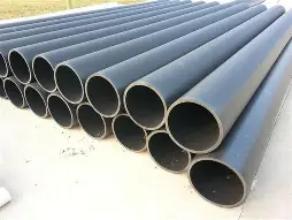
Introduction: The PE Pipe Landscape
Polyethylene (PE) pipes dominate modern infrastructure. First and foremost, they serve water supply, gas distribution, drainage, and industrial needs worldwide. As a result, the global PE pipe market exceeds 95 million kilometers of installed length. In fact, about 68% of new water pipelines use polyethylene materials.
Within the PE family, several types exist. These include Low-Density PE (LDPE), Medium-Density PE (MDPE), Cross-Linked PE (PEX), and High-Density PE (HDPE). Each has unique traits. Each targets specific applications.
HDPE stands out. Notably, it holds nearly 54% of the global PE pipe market by volume. This is no accident. Its molecular structure delivers unmatched performance across critical metrics. In this article, we will explain why HDPE pipes outperform all other PE types. We will focus on real-world infrastructure projects. We will highlight technical superiority and practical benefits.
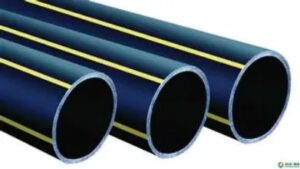
Understanding PE Pipe Classification
What Defines Each PE Pipe Type?
PE pipes classify by density and molecular structure. This classification shapes their performance. Furthermore, it dictates their ideal uses.
- LDPE (Low-Density Polyethylene): Density ranges from 0.910–0.925 g/cm³. It has many short-chain branches. Crystallinity is low (around 40–50%). It is very flexible but lacks strength. For example, it suits low-pressure uses like drip irrigation and landscaping.
- MDPE (Medium-Density Polyethylene): Density sits between 0.926–0.940 g/cm³. It has fewer branches than LDPE. Crystallinity is moderate (50–70%). It balances flexibility and strength. Thus, it often serves gas distribution and low-pressure water systems.
- PEX (Cross-Linked Polyethylene): Density is similar to LDPE or MDPE. Its molecular chains form cross-links. This boosts temperature resistance and strength. In contrast, it is common in residential plumbing and radiant heating.
- HDPE (High-Density Polyethylene): Density ranges from 0.941–0.965 g/cm³. It has minimal branching. Crystallinity is high (70–80%). This structure creates exceptional strength, rigidity, and durability. Ultimately, it leads in high-pressure, heavy-duty infrastructure projects.
The Critical Role of Density in Performance
Density drives performance differences. Higher density means tighter molecular packing. Consequently, this enhances key mechanical properties.
HDPE’s density is 10–15% higher than LDPE/MDPE. This gap delivers three major advantages:
- Mechanical Strength: HDPE’s ring stress reaches 12–16 MPa. This is nine times that of MDPE. As a result, it handles deeper burial (up to 4 meters) and heavier loads.
- Creep Resistance: HDPE retains shape under long-term stress. MDPE and LDPE deform more over time. Unlike HDPE, they lack long-term stability under pressure.
- Abrasion Resistance: HDPE’s higher molecular weight (10x MDPE) resists wear from slurries and solids. It outlasts other PE types in mining and industrial applications.
Core Advantages of HDPE Pipes Over Other PE Types
Unmatched Structural Integrity and Durability
HDPE’s molecular structure gives it superior strength. For this reason, it outperforms all other PE types in critical tests.
- Tensile Strength: HDPE offers 28–35 MPa tensile strength. LDPE offers 7–14 MPa. MDPE offers 12–24 MPa. This difference matters in high-pressure systems.
- Impact Resistance: HDPE resists cracking under impact. Even at -40°C, it stays ductile. LDPE and MDPE become brittle in cold. They crack more easily.
- Longevity: HDPE has a 50–100 year service life under normal conditions. LDPE/MDPE last 20–30 years. PEX lasts 40–50 years. In the long run, HDPE’s durability lowers lifecycle costs dramatically.
Superior Jointing Technology: The Fusion Advantage
HDPE uses heat fusion for joints. This creates seamless, leak-free connections. Crucially, no other PE type matches this reliability.
Fusion welding (butt, socket, or electrofusion) bonds pipes at the molecular level. The joint becomes as strong as the pipe itself. This eliminates leak paths common in gasketed systems.
Field studies confirm fusion-jointed HDPE networks operate over 50 years without joint leaks. LDPE/MDPE often use mechanical couplings. These have higher leak risks. PEX uses crimp or clamp fittings. These can fail over time, especially under thermal cycling.
Exceptional Chemical and Corrosion Resistance
All PE pipes resist corrosion. However, HDPE excels here too. Its non-polar molecular structure resists most chemicals. It handles acids, alkalis, salts, and organic solvents without degradation.
HDPE needs no protective coatings, linings, or cathodic protection. LDPE/MDPE also resist corrosion. But their lower density makes them more prone to permeation by certain chemicals. This limits their industrial use.
In wastewater systems, HDPE resists biological growth and mineral scaling. This maintains flow rates and reduces maintenance. On the other hand, other PE types face more frequent clogs and buildup.
Flexibility with Structural Stability: A Rare Combination
HDPE balances flexibility and rigidity. This is unique among PE pipes. It bends without breaking (elongation at break >600%). It absorbs ground movement, settlement, and seismic activity.
This flexibility enables trenchless installation (horizontal directional drilling, pipe bursting). These methods cut costs and environmental impact. LDPE is too flexible for large-diameter, high-pressure use. MDPE lacks HDPE’s rigidity for heavy loads.
In seismic zones, HDPE’s flexibility is critical. It outperforms rigid materials (PVC, ductile iron) during earthquakes. It minimizes damage and service disruptions.
Hydraulic Efficiency: Smooth Flow, Lower Costs
HDPE has a smooth internal surface. Its Hazen-Williams C-factor stays at 150 for decades. While other PE types also have smooth surfaces, HDPE’s structural stability maintains flow efficiency longer.
The smooth surface reduces friction loss. It allows smaller pipe diameters for the same flow rate. This cuts material and installation costs. Over time, HDPE resists scaling and biofilm better than LDPE/MDPE. It preserves hydraulic performance for the pipe’s life.
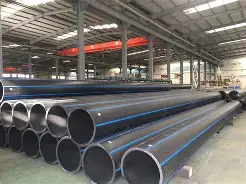
HDPE vs. Other PE Pipes: Application-Specific Comparisons
Water Supply and Distribution Systems
Water infrastructure demands reliability, safety, and long life. Specifically, HDPE delivers on all counts.
- Pressure Handling: HDPE (PE80/PE100 grades) handles pressures up to 1.6 MPa (PN16). MDPE tops out at 1.0 MPa (PN10). LDPE works only for low-pressure uses.
- Potable Water Safety: HDPE uses food-grade virgin materials. It meets global standards (ASTM D3350, ISO 4427). It does not leach harmful substances. It is approved for drinking water worldwide.
- Long-Distance Transmission: HDPE’s strength and leak-free joints suit long pipelines. A 2023 project in Australia used 1,200 km of HDPE pipe for water transfer. In the end, it outperformed MDPE options in cost and reliability.
Gas Distribution Networks
Gas pipelines need leak-tight systems and chemical resistance. As a result, HDPE is the global standard.
HDPE resists natural gas components and soil chemicals. Its fusion joints eliminate leak risks. This is critical for gas safety.
MDPE is used for low-pressure gas lines. However, HDPE dominates medium- to high-pressure systems. In Europe, 80% of new gas mains use HDPE. It outperforms MDPE in durability and pressure capacity.
Sanitary Sewer and Drainage Applications
Sewer systems face corrosive materials and heavy loads. HDPE is ideal here.
- Corrosion Resistance: Sewage contains aggressive chemicals and bacteria. HDPE resists all of them. It outlasts concrete and metal pipes.
- Abrasion Resistance: Wastewater carries solids that wear pipes. HDPE’s high molecular weight resists abrasion better than LDPE/MDPE. It is the top choice for industrial and municipal sewers.
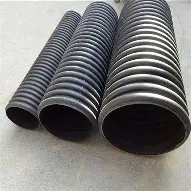
- Structural Wall Options: HDPE double-wall corrugated pipes (DN160–DN600) offer high ring stiffness with less material. They are lighter and cheaper than solid-wall pipes. They perform better than MDPE corrugated alternatives.
Industrial and Mining Applications
Industrial settings need pipes that handle extreme conditions. HDPE excels here.
It resists industrial chemicals, high temperatures, and heavy loads. It is used for chemical processing, slurry transport, and mine dewatering.
In mining, HDPE handles abrasive slurries better than any other PE type. A 2022 study in South Africa showed HDPE pipes lasted 3x longer than MDPE in gold mine tailings transport.
Trenchless Installation Projects
Trenchless methods (HDD, pipe bursting) minimize surface disruption. Importantly, HDPE is the only PE pipe that works well here.
Its flexibility allows bending around obstacles. Its strength handles installation stresses. LDPE is too weak for HDD. MDPE lacks the rigidity for long-distance pulls.
In urban areas, HDPE’s trenchless compatibility cuts costs by 30–50% versus open-trench methods. It reduces project timelines and community disruption.
Technical Superiority: Material Science Behind HDPE’s Edge
Molecular Structure: The Foundation of Performance
HDPE’s linear, low-branch structure creates high crystallinity. This structure gives it:
- Higher density and strength
- Better creep resistance
- Improved chemical resistance
- Greater thermal stability
HDPE has a branched structure. This lowers density and strength. MDPE is between LDPE and HDPE. It cannot match HDPE’s performance in demanding applications.
PE100 vs. PE80: HDPE’s Performance Grades
HDPE comes in grades like PE80 and PE100. These indicate minimum required strength (MRS). PE100 has a 10 MPa MRS. PE80 has 8 MPa.
PE100 is the modern standard for infrastructure. It allows thinner walls for the same pressure rating (SDR11 for PN16). This cuts material use and weight. It maintains performance.
Other PE types have no comparable high-performance grades. This limits their use in large-scale, high-pressure projects.
Standards Compliance: Global Recognition of Quality
HDPE pipes meet strict international standards. These include:
- ASTM D3035/D3350 (USA)
- ISO 4427 (global)
- EN 12201 (Europe)
- AWWA C906 (waterworks)
These standards ensure consistent quality and performance. No other PE type has such comprehensive global certification for heavy infrastructure use.
Cost-Effectiveness: Lifecycle Benefits That Matter
Initial Costs vs. Lifecycle Value
HDPE may cost more upfront than LDPE/MDPE. That said, its lifecycle savings are huge.
- Lower Transportation Costs: HDPE is lighter than metal or concrete. It needs fewer trucks and less fuel to ship.
- Faster Installation: HDPE is easy to handle and join. It reduces labor time by 40–60% versus other materials.
- Minimal Maintenance: HDPE needs no corrosion protection or frequent repairs. It cuts maintenance costs by 70–80% over 50 years.
- Longer Service Life: HDPE lasts 50–100 years. LDPE/MDPE last 20–30 years. This avoids costly replacements.
A 2024 analysis by the Plastics Pipe Institute found HDPE had the lowest lifecycle cost among all pipe materials. It beat MDPE by 23% and LDPE by 37% over 50 years.
Environmental Cost Savings
HDPE is eco-friendly. It reduces environmental impact and costs:
- Lower Energy Use: HDPE production uses 95 MJ/kg of energy. This is less than metal or concrete pipes.
- Reduced CO₂ Emissions: HDPE’s light weight cuts transport emissions by 60% versus steel pipes.
- Recyclability: HDPE is 100% recyclable. It can be reused in new pipes or other products.
- Trenchless Installation: This reduces excavation waste by 80% and preserves natural habitats.
Real-World Case Studies: HDPE in Action
Municipal Water Supply: The Dubai Mega-Project
Dubai’s 2023 water network expansion used 350 km of HDPE pipes (DN300–DN1200, PE100). Engineers chose HDPE over MDPE for three reasons:
- Higher pressure capacity (1.6 MPa vs. 1.0 MPa)
- Better resistance to Dubai’s extreme temperatures (50°C+)
- Lower lifecycle costs (projected 30% savings over 50 years)
The project finished 2 months early. It came in 15% under budget. HDPE’s fusion joints eliminated leak issues common with MDPE systems.
Gas Distribution: The German Grid Modernization
Germany’s 2022–2025 gas grid upgrade replaces 5,000 km of old steel pipes with HDPE. HDPE offers:
- 100% leak-free performance (critical for gas safety)
- Corrosion resistance (avoids 10-year maintenance cycles)
- Flexibility to handle ground movement in former mining areas
The project uses HDPE instead of MDPE. It expects to extend service life from 30 to 80 years. It will cut maintenance costs by €400 million over the pipe’s life.
Mining Slurry Transport: The Australian Iron Ore Project
A 2021 iron ore mine in Western Australia installed 120 km of HDPE pipes for slurry transport. HDPE outperformed LDPE and MDPE:
- It withstood 3x more abrasion from iron ore particles
- It handled 1.2 MPa pressure (vs. MDPE’s 0.8 MPa limit)
- It required no replacement in 5 years (LDPE needed replacement every 18 months)
The mine saved $2.1 million in maintenance and replacement costs over 5 years.
Why HDPE Is the Future of PE Pipe Technology
Innovation in HDPE Pipe Design
HDPE technology evolves fast. New developments include:
- Structural Wall Pipes: Double-wall corrugated and ribbed designs boost ring stiffness while cutting material use. They outperform MDPE structural pipes in strength and cost.
- Barrier Resin HDPE: These pipes resist chemical permeation. They suit hazardous waste and industrial applications where LDPE/MDPE fail.
- Electrofusion Fittings: Smart fittings with built-in sensors monitor joint integrity. They ensure long-term performance.
Sustainability: Aligning with Global Green Goals
The world prioritizes sustainable infrastructure. HDPE fits this trend perfectly.
It has a low carbon footprint. It is recyclable. It supports water conservation (leak-free systems save 15–20% of distributed water).
The UN’s Sustainable Development Goals (SDGs) highlight water security and climate action. HDPE helps achieve both. It reduces water loss and greenhouse gas emissions from pipe production and transport.
Market Trends: HDPE’s Growing Dominance
The global HDPE pipe market will grow at 6.2% CAGR through 2030. MDPE will grow at 3.1%. LDPE will grow at 1.8%. This gap shows HDPE’s rising popularity in infrastructure.
Factors driving this growth:
- Urbanization: More cities need reliable water and gas systems.
- Aging Infrastructure: Many countries replace old pipes with HDPE.
- Trenchless Technology: HDPE is the only PE pipe that works with these methods.
- Cost Efficiency: HDPE’s lifecycle savings attract budget-conscious governments.
Conclusion: HDPE Pipes—The Clear Choice for Infrastructure
HDPE pipes outperform all other PE types. Their molecular structure gives them unmatched strength, durability, and flexibility. They offer leak-free joints, chemical resistance, and hydraulic efficiency. They have lower lifecycle costs and environmental impact.
For water supply, gas distribution, sewers, industry, or mining—HDPE is the best choice. It meets global standards. It works in extreme conditions. It delivers reliable performance for 50–100 years.
As infrastructure demands grow, HDPE will lead the way. It is not just a pipe. It is a long-term investment in safe, sustainable, and cost-effective infrastructure.
Final Recommendation: Specify HDPE pipes (PE100 grade, SDR11 or SDR17) for all new infrastructure projects. Use fusion welding for joints. Follow ASTM D3350 and ISO 4427 standards. This ensures optimal performance and maximum lifecycle value.
Partner links: