![High-quality HDPE, PPR, PE, and PVC pipes supplied to projects worldwide – [Ten Dharma Realms Pipeline Company] | Exported to Europe, America, the Middle East, Southeast Asia, and Central Asia,Factory direct wholesale](https://sfjindustry.com/wp-content/uploads/2026/03/cropped-更换logo背景为透明-1.png)
- Introduction
- What Are Green HDPE Pipes and Their Core Advantages
2.1 Definition and Green Production Characteristics of Green HDPE Pipes
2.2 Key Performance Advantages of Green HDPE Pipes for Infrastructure
- Main Application Scenarios of Green HDPE Pipes in Global Overseas Infrastructure
3.1 Application in Municipal Water Supply and Drainage Infrastructure
3.2 Application in Urban Sewage and Wastewater Treatment Projects
3.3 Application in Road and Transportation Infrastructure Construction
3.4 Application in Agricultural Irrigation and Rural Infrastructure
3.5 Application in Industrial and Mining Infrastructure Support
- Why Green HDPE Pipes Are Preferred for Overseas Infrastructure Projects
4.1 Firstly, Compliance with Global Environmental Protection Standards
4.2 Secondly, Long-Term Economic Cost Advantages
4.3 In addition, Strong Adaptability to Complex Geological Environments
4.4 Furthermore, Matching Global Sustainable Infrastructure Goals
- Standard Installation and Maintenance of Green HDPE Pipes
5.1 Firstly, Standardized Installation Steps for Overseas Construction Sites
5.2 Secondly, Daily Maintenance Tips to Extend Service Life
- Current Market Trends and Future Development Prospects
- Conclusion
1. Introduction
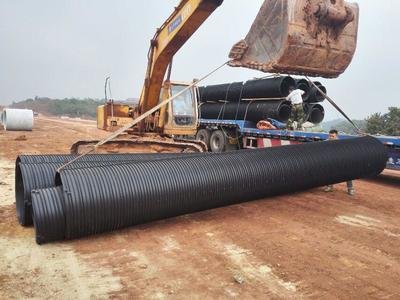
In recent years, global overseas infrastructure construction has developed rapidly.
At the same time, the concept of green and sustainable construction has become increasingly popular.
As a result, eco-friendly building materials have gained unprecedented attention.
Among various eco-friendly pipeline materials, green HDPE pipes stand out prominently.
This article mainly discusses the application of green HDPE pipes in global overseas infrastructure projects.
In addition, it will elaborate on the core advantages of green HDPE pipes.
Moreover, it will analyze the reasons why this pipeline is widely recognized in the infrastructure field.
Furthermore, it will provide professional guidance for engineering construction teams.
Not only that, but the article will also combine current market demands.
Meanwhile, it will predict the future development trend of green HDPE pipes.
Ultimately, it aims to provide valuable references for overseas infrastructure project construction.
2. What Are Green HDPE Pipes and Their Core Advantages
2.1 Definition and Green Production Characteristics of Green HDPE Pipes
Firstly, green HDPE pipes refer to high-density polyethylene pipes with eco-friendly attributes.
Specifically, they are made from recyclable or low-carbon environmental protection raw materials.
Besides, the entire production process follows strict green manufacturing standards.
During production, it effectively reduces energy consumption and carbon emissions.
In contrast to traditional plastic pipes, green HDPE pipes are completely non-toxic and pollution-free.
Additionally, they can be 100% recycled and reused after reaching service life.
Therefore, they fully conform to the global circular economy development concept.
2.2 Key Performance Advantages of Green HDPE Pipes for Infrastructure
Firstly, green HDPE pipes have excellent corrosion resistance.
That is to say, they are not corroded by soil, acid, alkali and other chemical substances.
As a result, they avoid rust and damage problems of traditional metal pipes.
Secondly, green HDPE pipes have high toughness and strong impact resistance.
Even under extreme weather or geological deformation, they are not easy to crack.
Besides, the inner wall of green HDPE pipes is extremely smooth.
Accordingly, this reduces fluid resistance and improves transportation efficiency.
Moreover, green HDPE pipes are lightweight in texture.
Consequently, this greatly reduces the difficulty of transportation and installation.
Most importantly, the service life of green HDPE pipes can exceed 50 years.
In comparison with traditional pipelines, their service life is greatly extended.
3. Main Application Scenarios of Green HDPE Pipes in Global Overseas Infrastructure
3.1 Application in Municipal Water Supply and Drainage Infrastructure
Municipal water supply and drainage is the basic link of urban infrastructure.
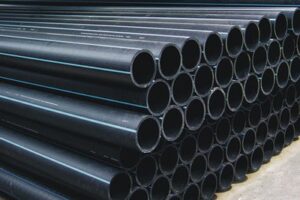
Firstly, green HDPE pipes are widely used in urban drinking water supply networks.
Because of their non-toxic and odorless characteristics, they effectively ensure water quality safety.
Besides, they have good sealing performance, so water leakage is greatly reduced.
For urban drainage systems, green HDPE pipes also play a key role.
They have strong drainage capacity and are not easy to block.
As a result, they ensure the efficient operation of urban rainwater and domestic water drainage.
In addition, many urban renewal projects take green HDPE pipes as the preferred material.
3.2 Application in Urban Sewage and Wastewater Treatment Projects
Urban sewage treatment is an important part of urban ecological governance.
Green HDPE pipes are very suitable for sewage collection and transportation projects.
Because they have strong chemical corrosion resistance.
They can resist the corrosion of various harmful substances in sewage.
Thus, they ensure the long-term stable operation of the sewage pipeline system.
Furthermore, green HDPE pipes are also used in wastewater recycling projects.
This helps to realize the reuse of reclaimed water and save water resources.
At the same time, they meet the environmental protection requirements of sewage treatment projects.
Therefore, they are widely used in urban sewage infrastructure in many countries.
3.3 Application in Road and Transportation Infrastructure Construction
With the rapid development of global transportation infrastructure.
Green HDPE pipes are widely used in road, railway, airport and port construction.
Firstly, they are used for underground drainage and cable protection pipelines of roads.
Because they have strong pressure resistance and can bear the pressure of road vehicles.
Besides, they adapt to the slight deformation of road foundation.
As a result, they avoid pipeline rupture caused by foundation settlement.
In addition, in port and airport infrastructure, green HDPE pipes also have important applications.
They meet the high-standard construction needs of large-scale transportation projects.
3.4 Application in Agricultural Irrigation and Rural Infrastructure
Agricultural infrastructure is a key field of overseas infrastructure construction.
Green HDPE pipes are widely used in agricultural irrigation systems.
Including sprinkler irrigation, drip irrigation and farmland water transmission pipelines.
Their smooth inner wall reduces water loss during transportation.
Accordingly, they improve agricultural irrigation efficiency and save water resources.
Besides, in rural infrastructure construction, they are used for rural drinking water supply.
Moreover, they are also applied to rural sewage treatment and farmland water conservancy projects.
Therefore, they promote the construction of modern and green rural infrastructure.
3.5 Application in Industrial and Mining Infrastructure Support
Industrial and mining infrastructure has strict requirements for pipeline materials.
Green HDPE pipes have excellent chemical stability.
They can transport industrial fluids and mining wastewater safely.
On the one hand, they avoid pipeline corrosion and leakage risks.
On the other hand, they reduce the maintenance cost of industrial pipelines.
In addition, they comply with industrial environmental protection emission standards.
Thus, they are widely recognized in industrial and mining infrastructure projects.
4. Why Green HDPE Pipes Are Preferred for Overseas Infrastructure Projects
4.1 Firstly, Compliance with Global Environmental Protection Standards
Nowadays, global environmental protection policies are becoming increasingly strict.
All overseas infrastructure projects must pass strict environmental impact assessment.
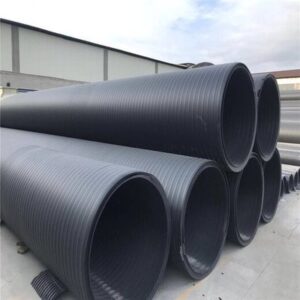
Green HDPE pipes are typical eco-friendly building materials.
They do not produce harmful substances during production and use.
Furthermore, they are recyclable and reduce environmental pollution.
Therefore, using green HDPE pipes can help projects pass environmental assessment smoothly.
4.2 Secondly, Long-Term Economic Cost Advantages
For large-scale overseas infrastructure projects, cost control is very important.
Green HDPE pipes have a long service life and low maintenance cost.
Although the initial investment is slightly higher, the later maintenance cost is greatly reduced.
In the long run, it reduces the overall cost of the project.
Besides, their lightweight feature shortens the construction period.
Accordingly, it saves labor and construction time costs.
Thus, green HDPE pipes have higher cost performance.
4.3 In addition, Strong Adaptability to Complex Geological Environments
Overseas infrastructure projects are often located in complex geological environments.
Such as mountainous areas, coastal areas, seismic zones and permafrost regions.
Green HDPE pipes have good flexibility and crack resistance.
They can adapt to different geological movements and soil erosion.
Even in harsh geological conditions, they can operate stably.
As a result, they reduce the project failure risk caused by geological factors.
4.4 Furthermore, Matching Global Sustainable Infrastructure Goals
At present, sustainable development has become the core goal of global infrastructure.
More and more countries advocate green and low-carbon infrastructure construction.
Green HDPE pipes fit the sustainable development concept perfectly.
They help projects achieve carbon reduction and environmental protection goals.
Besides, they promote the green transformation of the infrastructure industry.
Hence, they are highly recommended by governments and engineering institutions.
5. Standard Installation and Maintenance of Green HDPE Pipes
5.1 Firstly, Standardized Installation Steps for Overseas Construction Sites
The installation quality directly affects the service life of green HDPE pipes.
Firstly, before construction, the construction team must conduct on-site geological investigation.
According to the survey results, formulate a scientific pipeline laying plan.
Secondly, select professional hot-melt or electro-fusion connection technology.
This connection method ensures the sealing and stability of the pipeline.
Thirdly, after installation, strict pressure test must be carried out.
Check for pipeline leakage and ensure construction quality.
In addition, construction must be carried out in accordance with international standards.
Only in this way can the performance of green HDPE pipes be fully exerted.
5.2 Secondly, Daily Maintenance Tips to Extend Service Life
To extend the service life of green HDPE pipes, regular maintenance is essential.
Firstly, conduct regular pipeline inspections to check for external damage or blockage.
Secondly, clean the inner wall of the pipeline regularly to keep the fluid unobstructed.
Thirdly, avoid external heavy pressure or mechanical damage to the pipeline.
Besides, establish a complete pipeline maintenance record system.
Timely solve small problems in the maintenance process.
As a result, the service life of green HDPE pipes can be further extended.
6. Current Market Trends and Future Development Prospects
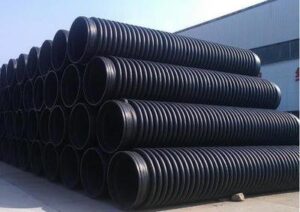
At present, the global demand for green HDPE pipes is growing continuously.
Driven by the Belt and Road Initiative and regional infrastructure plans.
Infrastructure projects in Asia, Africa, South America and other regions have a huge demand.
In addition, technological innovation of green HDPE pipes is accelerating.
The production process is more energy-saving and environmentally friendly.
The performance of the pipeline is also continuously optimized.
Moreover, the recycled application of green HDPE pipes will be more popular.
This conforms to the development trend of the global circular economy.
In the future, green HDPE pipes will become the mainstream pipeline for overseas infrastructure.
They will lead the development direction of eco-friendly infrastructure materials.
7. Conclusion
In summary, green HDPE pipes have a wide range of applications in global overseas infrastructure.
They have unparalleled advantages over traditional pipeline materials.
Not only do they have excellent physical and chemical properties, but also they have obvious eco-friendly advantages.
Meanwhile, they bring long-term economic benefits to infrastructure projects.
Furthermore, they match the global sustainable development strategy.
Whether in municipal, transportation, agricultural or industrial infrastructure.
Green HDPE pipes have become an irreplaceable core material.
Looking forward, with the further promotion of global green infrastructure construction.
The application scope of green HDPE pipes will continue to expand.
For overseas infrastructure developers and construction teams.
Choosing green HDPE pipes is a wise and reliable decision.
It not only ensures project quality but also fulfills environmental protection responsibilities.
Ultimately, green HDPE pipes will promote the sustainable development of global infrastructure construction.
They will also promote the coordinated progress of economic development and ecological environmental protection.
Partners Links: