![High-quality HDPE, PPR, PE, and PVC pipes supplied to projects worldwide – [Ten Dharma Realms Pipeline Company] | Exported to Europe, America, the Middle East, Southeast Asia, and Central Asia,Factory direct wholesale](https://sfjindustry.com/wp-content/uploads/2026/03/cropped-更换logo背景为透明-1.png)
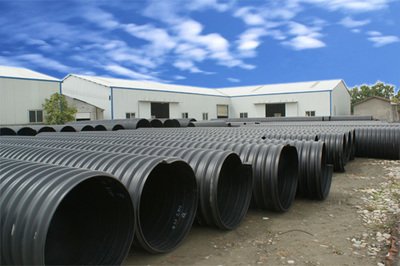
Urban sewage and rainwater infrastructure underpins daily municipal operations across every continent.
For global cities, this underground pipeline system directly shapes public health safety and flood‑defense capacity.
Across the past two decades, HDPE pipes have taken a dominant role in international drainage construction.
They have steadily replaced outdated concrete, cast‑iron and basic PVC pipe alternatives in urban engineering.
This analysis unpacks key drivers behind HDPE’s global popularity from multiple practical dimensions.
Specifically, it covers material performance, construction flexibility, long‑term economics and cross‑border project practices.
Besides these core factors, it highlights why HDPE outperforms traditional pipes for sewage and rainwater applications.
It also delivers actionable references for urban planners selecting pipeline materials worldwide.
2. Basic Traits of HDPE Pipes & Global Drainage Engineering Demand
2.1 Material Definition & Standardized Production Process
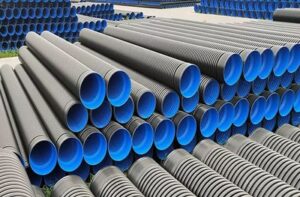
Industrial manufacturers produce HDPE pipes via fully automated extrusion molding lines.
Raw material blending, thermal melting, high‑pressure shaping and cooling form the complete production workflow.
Consistent factory processes guarantee uniform quality for HDPE pipes sold globally.
Dense molecular composition gives HDPE pipes their core physical and chemical strengths for buried use.
2.2 Global Urbanization Growth & Rising Drainage Needs
Worldwide urban population expansion accelerates year after year.
Growing urban populations produce larger volumes of domestic sewage and surface rainwater runoff.
Modern municipal drainage networks face heavy operational and upgrade pressures as cities expand.
Aging underground pipelines in old urban areas suffer from leakage, clogging and structural breakdowns.
Developed nations prioritize renovating their century‑old drainage pipe networks.
Developing economies must build entirely new sewage and rainwater systems from scratch.
Subsequently, global construction projects demand durable, low‑maintenance and cost‑effective pipe solutions.
HDPE pipes fully satisfy these real‑world municipal engineering requirements.
A mature, end‑to‑end supply chain now supports HDPE pipe production globally.
Top qualified manufacturers operate across Asia, Europe, North America and Oceania regions.
Apart from standard small‑diameter branch pipes, factories produce large‑scale trunk HDPE pipes for main sewage lines.
All mainstream HDPE products meet ASTM, EN and ISO international engineering standards.
Mass industrial manufacturing lowers per‑unit production costs significantly.
This affordability enables large‑volume adoption of HDPE pipes in national‑level municipal projects.
3. Core Physical & Chemical Advantages of HDPE Pipes
3.1 Outstanding Long‑Term Corrosion Resistance
Diverse corrosive substances exist within municipal sewage streams, including acids, alkalis and organic waste.
Concrete pipes degrade rapidly from long‑term contact with acidic underground sewage.
Cast‑iron pipes develop rust and perforations in damp, soil‑buried environments.
Conversely, HDPE material resists chemical reactions with nearly all sewage‑borne corrosive agents.
No rusting, scaling or structural degradation occurs during decades of underground service.
For long‑distance buried sewage transportation, HDPE pipes represent an ideal material choice.
3.2 Ultra‑Smooth Inner Wall & Anti‑Scaling Functionality
Molded HDPE pipe interiors feature exceptionally smooth surface textures.
Their surface roughness rating sits far below that of conventional concrete drainage pipes.
Such smoothness minimizes water flow friction and internal sediment buildup effectively.
Solid particles and dirt rarely stick to HDPE pipe inner walls during sewage transport.
Faster water flow speeds reduce blockage risks within urban drainage networks.
Engineers spend far less time on routine dredging and pipe cleaning tasks.
Overall operational efficiency of municipal sewage and rainwater systems rises noticeably.
3.3 Excellent Flexibility & Anti‑Impact Performance
Strong structural toughness defines the physical makeup of HDPE pipes.
They tolerate mild bending and ground deformation without pipe wall cracking or rupture.
This characteristic proves invaluable for construction on geologically complex landforms.
Soft‑soil zones, seismic belts and uneven settlement areas damage rigid concrete pipes easily.
HDPE pipelines naturally adjust to minor ground movement under buried conditions.
Underground pipe network integrity remains stable for decades of continuous service.
Pipeline rupture and sewage leakage risks drop sharply with HDPE material adoption.
3.4 High Tensile Strength & Stable Anti‑Creep Property
HDPE pipes offer reliable tensile strength and structural rigidity for buried loading conditions.
They withstand heavy pressure from backfill soil and above‑ground traffic loads.
Long‑term constant pressure triggers minimal permanent deformation thanks to anti‑creep properties.
Pipe collapse or structural failure almost never occurs within standard service lifespans.
Thus, HDPE pipes meet global municipal engineering standards of 50–100‑year service life.
This aligns perfectly with long‑term urban infrastructure planning cycles worldwide.
3.5 Reliable Sealing & Leak‑Proof Connection Performance
Hot‑melt butt welding and electric‑fusion welding serve as primary HDPE pipe connection methods.
Welded joints merge fully with pipe bodies to form seamless, monolithic structures.
Zero gaps or weak connection points exist within finished HDPE pipeline systems.
Consequently, sewage and rainwater leakage is nearly eliminated in HDPE drainage networks.
Underground soil erosion and groundwater contamination risks are effectively mitigated.
Urban underground environmental safety and ecological stability receive robust protection.
4. Construction & Installation Advantages of HDPE Pipes
4.1 Light‑Weight Structure Cuts Transportation & Handling Costs
HDPE pipes weigh drastically less than concrete and cast‑iron pipe alternatives.
Lower weight directly reduces freight expenses and on‑site handling difficulties.
No heavy‑duty construction machinery is required for manual installation in tight urban zones.
Workers can safely carry and position HDPE pipes within narrow road and residential construction areas.
This feature minimizes reliance on large‑scale equipment for urban municipal projects.
4.2 Fast Installation Process Shortens Overall Project Period
Streamlined installation workflows mark HDPE pipe construction practices.
Hot‑melt welding creates fast, high‑quality pipe connections in minimal time.
Many complex laying steps required for traditional rigid pipes are completely eliminated.
HDPE pipe construction timelines can be cut by over 30% compared to concrete pipe installation.
Quicker project completion limits disruptions to urban traffic and residential daily routines.
For this reason, HDPE pipes dominate urban pipeline renovation projects globally.
4.3 Perfect Compatibility with Modern Trenchless Construction Tech
Contemporary municipal engineering widely prioritizes non‑destructive trenchless construction techniques.
Horizontal directional drilling, pipe jacking and inner lining renovation fall under this category.
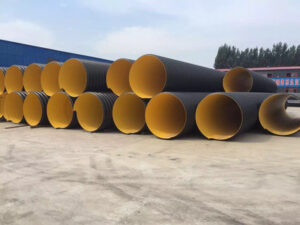
Flexible HDPE pipe bodies support continuous long‑distance laying for underground trenchless works.
Long ground excavation trenches are no longer needed for HDPE pipeline installation.
Urban road surfaces, green landscapes and existing underground utilities remain undamaged.
Construction‑related dust and noise pollution are significantly reduced in city centers.
European and American cities regularly select HDPE pipes for aging pipe network renewal works.
4.4 Strong Adaptability to Complex Urban Terrain Conditions
Urban drainage pipelines frequently need to navigate around buildings, tree roots and buried utilities.
Controlled bending capacity of HDPE pipes reduces reliance on extra elbow connection parts.
Pipeline layout design becomes more flexible for irregular urban construction spaces.
HDPE pipes adapt seamlessly to varied terrains and confined installation zones.
Overall complexity of urban engineering design and on‑site execution is lowered effectively.
5. Full‑Life‑Cycle Economic Advantages of HDPE Pipes
5.1 Controlled Initial Transportation & Construction Expenses
Even with slightly higher per‑unit pricing than basic concrete pipes, HDPE cuts total project costs.
Reduced weight lowers shipping fees and mechanical operation overheads directly.
Faster installation speeds trim labor costs and time‑related project expenses.
Total upfront investment for HDPE pipeline projects stays within municipal budget limits.
This cost balance fits financial requirements of global sewage and rainwater engineering projects.
5.2 Ultra‑Long Service Life Reduces Repeated Reconstruction Needs
Standard buried HDPE pipes operate reliably for 50–100 years under normal urban conditions.
Traditional concrete pipes require major repair or replacement within only 20–30 years.
Extended service lifespans eliminate frequent urban pipeline reconstruction cycles.
Municipal governments save massive long‑term infrastructure investment funds.
Disruptions from repeated construction work to urban daily life are largely avoided.
5.3 Minimal Maintenance & Daily Management Costs
Corrosion resistance, leak‑proof design and anti‑blocking traits define HDPE pipeline performance.
Buried HDPE networks need almost no regular inspection or cleaning maintenance.
Urban management authorities cut substantial long‑term pipeline upkeep expenditures.
Manpower and materials spent on routine drainage network checks are drastically reduced.
For large‑scale urban pipe systems, these low‑maintenance benefits become highly impactful.
5.4 Effective Reduction of Indirect Economic Losses
Pipeline rupture and sewage leakage trigger road collapse, pollution and traffic congestion risks.
These unplanned incidents generate huge indirect financial losses for city governments.
HDPE pipes deliver stable structural performance with extremely low failure rates in service.
Unforeseen urban economic damages from pipeline accidents are effectively prevented.
This hidden long‑term value makes HDPE favored by global urban planners and contractors.
6. Environmental Protection Advantages Meeting Global Green Standards
6.1 Non‑Toxic Material Ensures Urban Ecological Safety
HDPE raw materials are non‑toxic, odorless thermoplastic polymer compounds.
No harmful chemical substances leach into surrounding soil or water environments.
Sewage, groundwater and urban soil remain free from HDPE‑related contamination risks.
These properties meet strict global standards for rainwater reuse and urban water resource recycling.
Urban ecological balance and resident long‑term health receive robust protection.
6.2 Recyclable Features Support Global Low‑Carbon Development
HDPE falls under the category of fully recyclable thermoplastic construction materials.
End‑of‑life HDPE pipes can be reprocessed and repurposed for new manufacturing uses.
Non‑degradable construction waste volumes are significantly lowered through recycling practices.
HDPE pipe production consumes far less energy than concrete pouring or metal smelting processes.
Full‑life‑cycle carbon emissions sit well below traditional pipe material alternatives.
Accordingly, HDPE pipelines align with global circular economy and low‑carbon urban policies.
6.3 Critical Role in Global Sponge City Construction
Sponge city initiatives require efficient urban rainwater collection, infiltration and drainage infrastructure.
High drainage efficiency and flexible structure make HDPE pipes ideal for such projects.
They are widely installed in rainwater gardens, permeable pavements and underground rainwater storage tanks.
Urban flood control and drought‑resilience capacities are greatly improved with HDPE adoption.
Rational reuse of urban rainwater resources is boosted across climate‑change‑affected regions.
6.4 Prevention of Soil & Groundwater Secondary Pollution
Seamless HDPE pipe connections completely stop underground sewage leakage events.
Precious urban groundwater resources are protected from chemical and biological contamination.
Underground soil layers avoid erosion from toxic sewage waste materials.
These environmental strengths satisfy strict EU, US and other developed‑nation protection norms.
[Internal Link 2: HDPE pipe environmental protection test and certification report]
7. Global Regional Application Cases of HDPE Pipes
7.1 Wide Adoption in European Municipal Engineering
Strict urban infrastructure regulations govern construction practices across European nations.
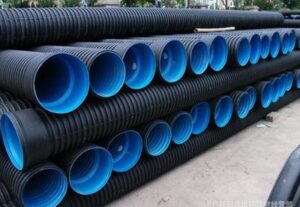
Germany, the United Kingdom and France extensively deploy HDPE double‑wall corrugated pipes.
These pipes serve as primary sewage trunk lines and urban rainwater flood‑control pipelines.
Nearly all trenchless old‑pipe‑renewal projects in Europe select HDPE as the core material.
European requirements for environmental safety, durability and urban aesthetics are fully met.
7.2 Mature Application in North American Drainage Projects
Vast land areas and varied climates define North American urban construction conditions.
Frost resistance and anti‑ground‑heave performance make HDPE pipes highly suitable here.
They are widely used in urban sewage collection networks and suburban rainwater diversion systems.
Cold northern frozen‑soil zones rely heavily on HDPE pipes for year‑round stable drainage.
HDPE remains the primary pipe material for municipal engineering across the United States and Canada.
7.3 Rapid Market Growth in Asian Emerging Urban Markets
Fast‑paced urbanization reshapes infrastructure demands across many Asian countries.
China, India and Southeast Asian nations face surging needs for modern drainage systems.
High cost‑effectiveness fits HDPE pipes for densely built Asian urban environments.
Sponge city projects and sewage treatment supporting networks widely adopt HDPE pipelines.
Regional HDPE pipe market size expands rapidly year over year across Asian urban centers.
7.4 Infrastructure Upgrading in Africa & Oceania
Basic municipal drainage construction proceeds steadily across most African nations.
Australia and New Zealand prioritize ecological protection in urban infrastructure planning.
Low long‑term maintenance costs and extended service life benefit less‑developed regions greatly.
HDPE pipes support steady improvement of municipal service levels in these areas.
8. Future Development Trends of HDPE Pipes in Global Municipal Engineering
8.1 Material Performance Upgrading for Higher Engineering Standards
Advancements in polymer technology continuously improve modified HDPE material formulas.
High‑strength and heat‑resistant HDPE variants expand global pipeline application scopes.
Super‑large‑diameter HDPE pipes will meet demands for major urban sewage trunk‑line construction.
8.2 Integration with Global Smart City Drainage Systems
Intelligent monitoring sensors can be embedded directly within HDPE pipe structures.
These sensors track water flow, pressure, leakage risks and blockage status in real time.
Digital smart drainage networks are built through HDPE‑integrated monitoring technology.
Remote automatic early warning and efficient pipeline management become fully achievable.
Core technical support for global smart city development is delivered by these systems.
8.3 Expanded Role in Global Rainwater Harvesting Projects
Climate‑change‑driven flood risks raise global focus on rainwater resource utilization.
HDPE corrugated and permeable pipes are key components of international sponge city facilities.
Urban rainwater regulation, storage and reuse capacities are enhanced in every participating country.
9. Conclusion
HDPE pipes have secured top‑choice status for global municipal sewage and rainwater engineering projects.
This dominant position comes from multi‑dimensional competitive advantages over traditional pipes.
Corrosion resistance, leak‑proof sealing and structural flexibility define its core physical strengths.
Fast installation workflows, easy construction and low full‑life‑cycle costs deliver economic value.
Environmental‑friendly and low‑carbon traits satisfy global sustainable development requirements.
Clear overall performance gaps exist between HDPE pipes and older drainage pipe alternatives.
With ongoing global urbanization and infrastructure modernization, HDPE usage will keep expanding.
It will continuously drive progress toward safer, more efficient and greener urban underground drainage systems worldwide.